AWS Certified Developer – Associate DVA-C02 Exam Learning Path

AWS Certified Developer - Associate Certification

AWS Certified Developer – Associate DVA-C02 Exam Learning Path

  • AWS Certified Developer – Associate DVA-C02 exam is the latest AWS exam released on 27th February 2023 and has replaced the previous AWS Developer – Associate DVA-C01 certification exam.
  • I passed the AWS Developer – Associate DVA-C02 exam with a score of 835/1000.

AWS Certified Developer – Associate DVA-C02 Exam Content

  • DVA-C02 validates a candidate’s ability to demonstrate proficiency in developing, testing, deploying, and debugging AWS cloud-based applications.
  • DVA-C02 also validates a candidate’s ability to complete the following tasks:
    • Develop and optimize applications on AWS
    • Package and deploy by using continuous integration and continuous delivery (CI/CD) workflows
    • Secure application code and data
    • Identify and resolve application issues

Refer AWS Certified Developer – Associate Exam Blue Print
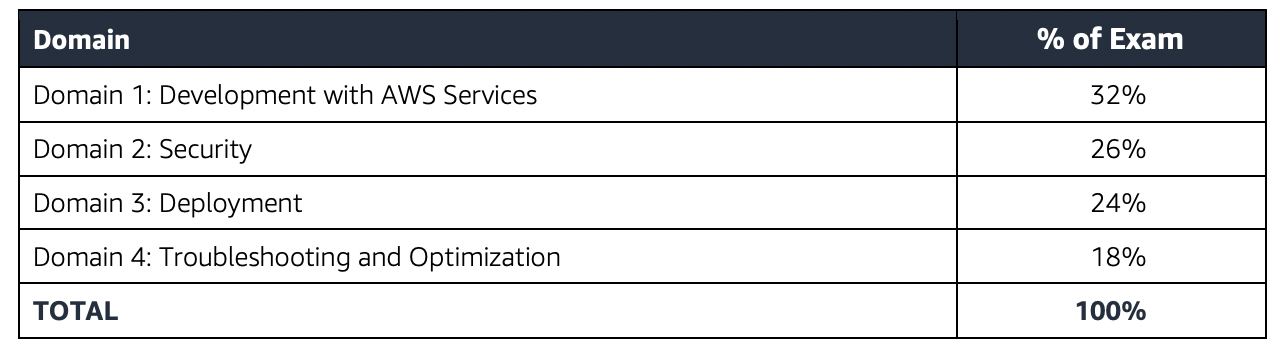
AWS Certified Developer - Associate Domains

DVA-C02 Exam Guide Version 2.1 Update (December 2024)

  • AWS revised the DVA-C02 exam guide to Version 2.1 on December 12, 2024, adding 18 new skills and updating in-scope services.
  • Key new skills added:
    • Use Amazon Q Developer for development assistance
    • Implement event-driven patterns using Amazon EventBridge
    • Implement resilient application code (retry logic, circuit breakers, error handling patterns)
    • Implement Lambda functions for real-time data processing and transformation
    • Use specialized data stores based on access patterns (e.g., Amazon OpenSearch Service)
    • Implement application-level authorization for fine-grained access control
    • Handle cross-service authentication in microservices architectures
    • Implement application-level data masking and sanitization
    • Implement data access patterns for multi-tenant applications
    • Prepare application configurations for different environments (e.g., AWS AppConfig)
    • Test event-driven applications
    • Use Amazon Q Developer to generate automated tests
    • Debug service integration issues in applications
    • Create application health checks and readiness probes
    • Implement application-level caching for improved performance
    • Implement structured logging for application events and user actions
    • Configure deployment strategies (blue/green, canary, rolling) for application releases
  • Services added to in-scope: Amazon Q Developer
  • Services removed from in-scope: AWS Copilot (EOL June 2026), Amazon CodeGuru (EOL November 2025)
  • Refer DVA-C02 Exam Guide Revisions

AWS Certified Developer – Associate DVA-C02 Summary

  • DVA-C02 exam consists of 65 questions in 130 minutes, and the time is more than sufficient if you are well-prepared.
  • DVA-C02 exam includes two types of questions, multiple-choice and multiple-response.
  • DVA-C02 has a scaled score between 100 and 1,000. The scaled score needed to pass the exam is 720.
  • Associate exams currently cost $ 150 + tax.
  • You can get an additional 30 minutes if English is your second language by requesting Exam Accommodations. It might not be needed for Associate exams but is helpful for Professional and Specialty ones.
  • AWS exams can be taken either remotely or online, I prefer to take them online as it provides a lot of flexibility. Just make sure you have a proper place to take the exam with no disturbance and nothing around you.
  • Also, if you are taking the AWS Online exam for the first time try to join at least 30 minutes before the actual time as I have had issues with both PSI and Pearson with long wait times.

AWS Certified Developer – Associate DVA-C02 Exam Resources

AWS Certified Developer – Associate DVA-C02 Exam Topics

  • AWS DVA-C02 exam concepts cover solutions that fall within AWS Well-Architected framework to cover scalable, highly available, cost-effective, performant, and resilient pillars.
  • AWS Certified Developer – Associate DVA-C02 exam covers a lot of the latest AWS services like Amplify, X-Ray, Amazon Q Developer while focusing majorly on other services like Lambda, DynamoDB, Elastic Beanstalk, S3, EC2
  • The December 2024 exam revision (Version 2.1) added focus on event-driven architectures, resilient coding patterns, multi-tenant data access, and AI-assisted development using Amazon Q Developer.
  • AWS Certified Developer – Associate DVA-C02 exam is similar to DVA-C01 with more focus on the hands-on development and deployment concepts rather than just the architectural concepts.

Compute

  • Elastic Cloud Compute – EC2
  • Auto Scaling and ELB
    • Auto Scaling provides the ability to ensure a correct number of EC2 instances are always running to handle the load of the application
    • Elastic Load Balancer allows the incoming traffic to be distributed automatically across multiple healthy EC2 instances
  • Autoscaling & ELB
    • work together to provide High Availability and Scalability.
    • Span both ELB and Auto Scaling across Multi-AZs to provide High Availability
    • Do not span across regions. Use Route 53 or Global Accelerator to route traffic across regions.
  • Lambda and serverless architecture, its features, and use cases.
    • Lambda integrated with API Gateway to provide a serverless, highly scalable, cost-effective architecture.
    • Lambda execution role needs the required permissions to integrate with other AWS services.
    • Environment variables to keep functions configurable.
    • Lambda Layers provide a convenient way to package libraries and other dependencies that you can use with your Lambda functions.
    • Function versions can be used to manage the deployment of the functions.
    • Function Alias supports creating aliases, which are mutable, for each function version.
    • provides /tmp ephemeral scratch storage.
    • Integrates with X-Ray for distributed tracing.
    • Use RDS proxy for connection pooling.
    • Lambda SnapStart – reduces cold start latency to sub-second for Java (GA 2022), and now also supports Python and .NET functions (GA November 2024). Works by caching and reusing snapshotted memory and disk state.
    • Recursive loop detection – automatically detects and stops recursive invocations between Lambda and supported services (SQS, SNS, S3) after 16 invocations. Function-level configuration APIs added (August 2024) to customize behavior.
    • Advanced logging controls – supports structured JSON logging format, configurable log levels, and choice of log destination. Tiered pricing for CloudWatch Logs introduced (May 2025).
  • Elastic Container Service – ECS with its ability to deploy containers and microservices architecture.
    • ECS role for tasks can be provided through taskRoleArn
    • ALB provides dynamic port mapping to allow multiple same tasks on the same node.
  • Elastic Kubernetes Service – EKS
    • managed Kubernetes service to run Kubernetes in the AWS cloud and on-premises data centers
    • ideal for migration of an existing workload on Kubernetes
  • Elastic Beanstalk
    • at a high level, what it provides, and its ability to get an application running quickly.
    • Deployment types with their advantages and disadvantages

Databases

  • Understand relational and NoSQL data storage options which include RDS, DynamoDB, and Aurora with their use cases
  • Relational Database Service – RDS
    • Read Replicas vs Multi-AZ
      • Read Replicas for scalability, Multi-AZ for High Availability
      • Multi-AZ is regional only
      • Read Replicas can span across regions and can be used for disaster recovery
  • RDS Proxy
    • fully managed, highly available database proxy for RDS that makes applications more secure, scalable, more resilient to database failures.
    • allows apps to pool and share DB connections established with the database
  • DynamoDB
    • provides low latency performance, a key-value store
    • is not a relational database
    • Secondary indexes on a table allow efficient access to data with attributes other than the primary key.
    • Know Local Secondary Indexes vs Global Secondary Indexes
    • DynamoDB DAX provides caching for DynamoDB
    • DynamoDB TTL helps expire data in DynamoDB without any cost or consuming any write throughput.
    • DynamoDB Streams provides a time-ordered sequence of item-level changes made to data in a table and integrates with Lambda.
    • DynamoDB Best Practices around designing partition keys and secondary indexes.
    • DynamoDB Zero-ETL integration with Amazon Redshift (GA October 2024) – enables running analytics on DynamoDB data without managing ETL pipelines.
    • Price reductions (November 2024) – 50% reduction for on-demand throughput and up to 67% for global tables.
    • Global tables cross-account replication (2025) – supports replication across AWS accounts for multi-account architectures.
  • ElastiCache use cases, mainly for caching performance

Storage

  • Simple Storage Service – S3
    • S3 storage classes with lifecycle policies
      • Understand the difference between SA Standard vs SA IA vs SA IA One Zone in terms of cost and durability
    • S3 Data Protection
      • S3 Client-side encryption encrypts data before storing it in S3
      • S3 encryption in transit can be enforced with S3 bucket policies using secureTransport attributes.
      • S3 encryption at rest can be enforced with S3 bucket policies using x-amz-server-side-encryption attribute.
    • S3 features including
      • S3 provides cost-effective static website hosting. However, it does not support HTTPS endpoint. Can be integrated with CloudFront for HTTPS, caching, performance, and low-latency access.
      • S3 versioning provides protection against accidental overwrites and deletions. Used with MFA Delete feature.
      • S3 Pre-Signed URLs for both upload and download provide access without needing AWS credentials.
      • S3 CORS allows cross-domain calls
      • S3 Transfer Acceleration enables fast, easy, and secure transfers of files over long distances between your client and an S3 bucket.
      • S3 Event Notifications to trigger events on various S3 events like objects added or deleted. Supports SQS, SNS, Lambda functions, and Amazon EventBridge.
      • Integrates with Amazon Macie to detect PII data
      • Replication that supports the same and cross-region replication required versioning to be enabled.
      • Integrates with Athena to analyze data in S3 using standard SQL.
  • Instance Store
    • is physically attached to the EC2 instance and provides the lowest latency and highest IOPS
  • Elastic Block Storage – EBS
    • EBS volume types and their use cases in terms of IOPS and throughput. SSD for IOPS and HDD for throughput
  • Elastic File System – EFS
    • simple, fully managed, scalable, serverless, and cost-optimized file storage for use with AWS Cloud and on-premises resources.
    • provides shared volume across multiple EC2 instances, while EBS can be attached to a single instance within the same AZ or EBS Multi-Attach can be attached to multiple instances within the same AZ
    • can be mounted with Lambda functions
    • supports the NFS protocol, and is compatible with Linux-based AMIs
    • supports cross-region replication and storage classes for cost management.
  • Difference between EBS vs S3 vs EFS
  • Difference between EBS vs Instance Store
  • Would recommend referring Storage Options whitepaper, although a bit dated 90% still holds right

Security & Identity

  • Identity Access Management – IAM
    • IAM role
      • provides permissions that are not associated with a particular user, group, or service and are intended to be assumable by anyone who needs it.
      • can be used for EC2 application access and Cross-account access
    • IAM Best Practices
  • Cognito
    • provides authentication, authorization, and user management for the web and mobile apps.
    • User pools are user directories that provide sign-up and sign-in options for the app users.
    • Identity pools enable you to grant the users access to other AWS services.
  • Key Management Services – KMS encryption service
    • for key management and envelope encryption
    • provides encryption at rest and does not handle encryption in transit.
  • Amazon Certificate Manager – ACM
    • helps easily provision, manage, and deploy public and private SSL/TLS certificates for use with AWS services and internally connected resources.
  • AWS Secrets Manager
    • helps protect secrets needed to access applications, services, and IT resources.
    • supports automatic rotations of secrets
  • Secrets Manager vs Systems Manager Parameter Store for secrets management
    • Secrets Manager supports automatic credentials rotation and is integrated with Lambda and other services like RDS, and DynamoDB.
    • Systems Manager Parameter Store provides free standard parameters and is cost-effective as compared to Secrets Manager.

Front-end Web and Mobile

  • API Gateway
    • is a fully managed service that makes it easy for developers to publish, maintain, monitor, and secure APIs at any scale.
    • Powerful, flexible authentication mechanisms, such as AWS IAM policies, Lambda authorizer functions, and Amazon Cognito user pools.
    • supports Canary release deployments for safely rolling out changes.
    • define usage plans to meter, restrict third-party developer access, configure throttling, and quota limits on a per API key basis
    • integrates with AWS X-Ray for understanding and triaging performance latencies.
    • API Gateway CORS allows cross-domain calls
  • Amplify
    • is a complete solution that lets frontend web and mobile developers easily build, ship, and host full-stack applications on AWS, with the flexibility to leverage the breadth of AWS services as use cases evolve.

Management Tools

  • CloudWatch
    • monitoring to provide operational transparency
    • is extendable with custom metrics
    • does not capture memory metrics, by default, and can be done using the CloudWatch agent.
  • EventBridge
    • is a serverless event bus service that makes it easy to connect applications with data from a variety of sources.
    • enables building loosely coupled and distributed event-driven architectures.
    • (New in V2.1) Understand implementing event-driven patterns using EventBridge for decoupled, scalable architectures.
  • CloudTrail
    • helps enable governance, compliance, and operational and risk auditing of the AWS account.
    • helps to get a history of AWS API calls and related events for the AWS account.
  • CloudFormation
    • easy way to create and manage a collection of related AWS resources, and provision and update them in an orderly and predictable fashion.
    • Supports Serverless Application Model – SAM for the deployment of serverless applications including Lambda.
    • CloudFormation StackSets extends the functionality of stacks by enabling you to create, update, or delete stacks across multiple accounts and Regions with a single operation.
  • AWS AppConfig (capability of AWS Systems Manager)
    • (New in V2.1) Used to prepare application configurations for different environments.
    • Helps create, manage, and deploy application configurations including feature flags.
    • Integrates with Lambda via the AppConfig Agent Lambda extension for dynamic configuration without redeployment.
    • Supports gradual deployment with rollback on errors.

Integration Tools

  • Simple Queue Service
    • as message queuing service and SNS as pub/sub notification service
    • as a decoupling service and provide resiliency
    • SQS features like visibility, and long poll vs short poll
    • provide scaling for the Auto Scaling group based on the SQS size.
    • SQS Standard vs SQS FIFO difference
      • FIFO provides exactly-once delivery but with low throughput
  • Simple Notification Service – SNS
    • is a web service that coordinates and manages the delivery or sending of messages to subscribing endpoints or clients
    • Fanout pattern can be used to push messages to multiple subscribers.
  • Understand SQS as a message queuing service and SNS as a pub/sub notification service.
  • Know AWS Developer tools
    • CodeCommit is a secure, scalable, fully-managed source control service that hosts private Git repositories. Note: CodeCommit was briefly deprecated in July 2024 but returned to General Availability in November 2025. However, it remains in feature freeze with no new features planned.
    • CodeBuild is a fully managed build service that compiles source code, runs tests, and produces software packages that are ready to deploy.
    • CodeDeploy helps automate code deployments to any instance, including EC2 instances and instances running on-premises.
    • CodePipeline is a fully managed continuous delivery service that helps automate the release pipelines for fast and reliable application and infrastructure updates.
    • CodeArtifact is a fully managed artifact repository service that makes it easy for organizations of any size to securely store, publish, and share software packages used in their software development process.
  • X-Ray
    • helps developers analyze and debug production, distributed applications for e.g. built using a microservices lambda architecture

AI-Assisted Development (New in V2.1)

  • Amazon Q Developer
    • AI-powered development assistant added to DVA-C02 in-scope services (December 2024 revision).
    • Provides code generation, debugging assistance, code transformation, and security scanning.
    • Can generate automated tests for application code.
    • Supports code optimization and refactoring recommendations.
    • Note: AWS announced end-of-support for Amazon Q Developer IDE plugins (April 30, 2027) with successor being Kiro IDE. The exam currently tests Q Developer concepts.

Resilient Application Patterns (New in V2.1)

  • Implement resilient application code for third-party service integrations:
    • Retry logic – exponential backoff with jitter for transient failures
    • Circuit breakers – prevent cascading failures by stopping requests to failing services
    • Error handling patterns – graceful degradation, fallback responses
    • Health checks and readiness probes – application-level health monitoring
  • Cross-service authentication in microservices architectures
  • Data access patterns for multi-tenant applications
  • Application-level data masking and sanitization

Analytics

  • Redshift as a business intelligence tool
  • Kinesis
    • for real-time data capture and analytics.
    • Integrates with Lambda functions to perform transformations
  • AWS Glue
    • fully-managed, ETL service that automates the time-consuming steps of data preparation for analytics
  • Amazon OpenSearch Service
    • (New in V2.1) Use specialized data stores based on access patterns.
    • Provides search, log analytics, and real-time application monitoring.

Networking

  • Does not cover much networking or designing networks, but be sure you understand VPC, Subnets, Routes, Security Groups, etc.

AWS Cloud Computing Whitepapers

Deprecated/Removed Services (No Longer in DVA-C02 Scope)

  • AWS Copilot CLI – Reached end-of-support on June 12, 2026. Use ECS Express Mode or AWS CDK for containerized deployments instead. Removed from exam scope in December 2024 revision.
  • Amazon CodeGuru – End of support November 20, 2025. Functionality replaced by Amazon Q Developer for code reviews and security scanning. Removed from exam scope in December 2024 revision.

On the Exam Day

  • Make sure you are relaxed and get some good night’s sleep. The exam is not tough if you are well-prepared.
  • If you are taking the AWS Online exam
    • Try to join at least 30 minutes before the actual time as I have had issues with both PSI and Pearson with long wait times.
    • The online verification process does take some time and usually, there are glitches.
    • Remember, you would not be allowed to take the take if you are late by more than 30 minutes.
    • Make sure you have your desk clear, no hand-watches, or external monitors, keep your phones away, and nobody can enter the room.

Finally, All the Best 🙂
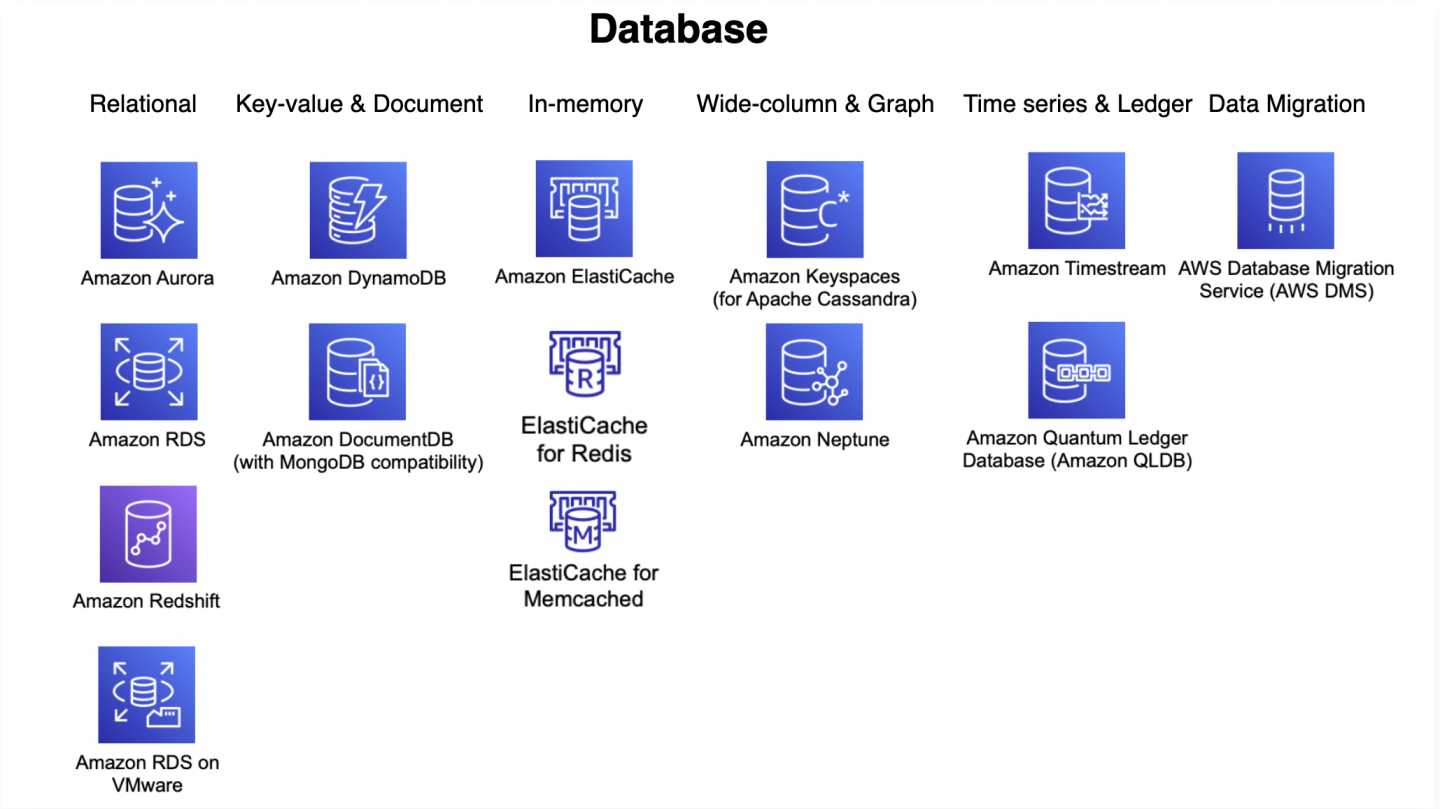
AWS Database Services Cheat Sheet – RDS, DynamoDB, Aurora

AWS Database Services Cheat Sheet

AWS Database Services

📋 Last Updated: June 2026

This cheat sheet has been updated to include Aurora DSQL, Aurora storage increase to 256 TiB, ElastiCache for Valkey, ElastiCache Serverless, Redshift Multi-AZ and Serverless, DynamoDB multi-Region strong consistency, zero-ETL integrations, RDS Multi-AZ DB Clusters with readable standbys, and RDS Extended Support.

Relational Database Service – RDS

  • provides Relational Database service
  • supports MySQL, MariaDB, PostgreSQL, Oracle, Microsoft SQL Server, Amazon Aurora, and IBM Db2 (added in 2023) DB engines
  • as it is a managed service, shell (root ssh) access is not provided
  • manages backups, software patching, automatic failure detection, and recovery
  • supports use initiated manual backups and snapshots
  • daily automated backups with database transaction logs enables Point in Time recovery up to the last five minutes of database usage
  • snapshots are user-initiated storage volume snapshot of DB instance, backing up the entire DB instance and not just individual databases that can be restored as a independent RDS instance
  • RDS Security
    • support encryption at rest using KMS as well as encryption in transit using SSL endpoints
    • supports IAM database authentication, which prevents the need to store static user credentials in the database, because authentication is managed externally using IAM.
    • supports Encryption only during creation of an RDS DB instance
    • existing unencrypted DB cannot be encrypted and you need to create a snapshot, create an encrypted copy of the snapshot and restore as encrypted DB
    • supports Secrets Manager for storing and rotating secrets
    • for encrypted database
      • logs, snapshots, backups, read replicas are all encrypted as well
      • cross region replicas and snapshots are supported for encrypted instances
  • Multi-AZ deployment
    • provides high availability and automatic failover support and is NOT a scaling solution
    • maintains a synchronous standby replica in a different AZ
    • transaction success is returned only if the commit is successful both on the primary and the standby DB
    • Oracle, PostgreSQL, MySQL, and MariaDB DB instances use Amazon technology, while SQL Server DB instances use SQL Server Always On Availability Groups
    • snapshots and backups are taken from standby & eliminate I/O freezes
    • during automatic failover, its seamless and RDS switches to the standby instance and updates the DNS record to point to standby
    • failover can be forced with the Reboot with failover option
  • Multi-AZ DB Cluster (Readable Standbys)
    • provides a primary DB instance and two readable standby DB instances in different AZs
    • standby instances can serve read traffic, providing additional read capacity
    • uses semi-synchronous replication with transaction log-based replication
    • provides faster failover (typically under 35 seconds) compared to Multi-AZ instance deployment
    • supports MySQL and PostgreSQL engines
    • offers lower write latency compared to Multi-AZ instance deployments
  • Read Replicas
    • uses the PostgreSQL, MySQL, and MariaDB DB engines’ built-in replication functionality to create a separate Read Only instance
    • updates are asynchronously copied to the Read Replica, and data might be stale
    • can help scale applications and reduce read only load
    • requires automatic backups enabled
    • replicates all databases in the source DB instance
    • for disaster recovery, can be promoted to a full fledged database
    • can be created in a different region for disaster recovery, migration and low latency across regions
    • can’t create encrypted read replicas from unencrypted DB or read replica
  • RDS does not support all the features of underlying databases, and if required the database instance can be launched on an EC2 instance
  • RDS Components
    • DB parameter groups contains engine configuration values that can be applied to one or more DB instances of the same instance type for e.g. SSL, max connections etc.
    • Default DB parameter group cannot be modified, create a custom one and attach to the DB
    • Supports static and dynamic parameters
      • changes to dynamic parameters are applied immediately (irrespective of apply immediately setting)
      • changes to static parameters are NOT applied immediately and require a manual reboot.
  • RDS Monitoring & Notification
    • integrates with CloudWatch and CloudTrail
    • CloudWatch provides metrics about CPU utilization from the hypervisor for a DB instance, and Enhanced Monitoring gathers its metrics from an agent on the instance
    • Performance Insights is a database performance tuning and monitoring feature that helps illustrate the database’s performance and help analyze any issues that affect it
    • supports RDS Event Notification which uses the SNS to provide notification when an RDS event like creation, deletion or snapshot creation etc occurs
  • RDS Blue/Green Deployments
    • creates a staging (green) environment that mirrors the production (blue) environment
    • enables safer database updates, major version upgrades, and schema changes with minimal downtime (under 5 seconds)
    • supports Aurora MySQL, Aurora PostgreSQL, RDS for MySQL, RDS for MariaDB, and RDS for PostgreSQL
    • now supports Aurora Global Database (2025)
  • RDS Extended Support
    • allows running databases on a major engine version up to 3 years past its RDS end of standard support date at an additional cost
    • provides critical security and bug fixes after the community ends support for a major version
    • databases are automatically enrolled if not upgraded before the end of standard support date
  • Zero-ETL Integrations
    • RDS for MySQL and Aurora support zero-ETL integration with Amazon Redshift
    • enables near real-time analytics on transactional data without building ETL pipelines
    • data is automatically replicated to Amazon Redshift within seconds of being written

⚠️ RDS Custom for Oracle – End of Support (March 31, 2027)

AWS will end support for Amazon RDS Custom for Oracle on March 31, 2027. After this date, you will no longer be able to access the RDS Custom for Oracle console or resources.

Migration Options: Migrate to Amazon RDS for Oracle (standard) or run Oracle on Amazon EC2 bare metal instances.

Aurora

  • is a relational database engine that combines the speed and reliability of high-end commercial databases with the simplicity and cost-effectiveness of open source databases
  • is a managed service and handles time-consuming tasks such as provisioning, patching, backup, recovery, failure detection and repair
  • is a proprietary technology from AWS (not open sourced)
  • provides PostgreSQL and MySQL compatibility
  • is “AWS cloud optimized” and claims 5x performance improvement over MySQL on RDS, over 3x the performance of PostgreSQL on RDS
  • scales storage automatically in increments of 10GB, up to 256 TiB (increased from 128 TiB in July 2025) with no impact to database performance. Storage is striped across 100s of volumes.
  • no need to provision storage in advance.
  • provides self-healing storage. Data blocks and disks are continuously scanned for errors and repaired automatically.
  • provides instantaneous failover
  • replicates each chunk of the database volume six ways across three Availability Zones i.e. 6 copies of the data across 3 AZ
    • requires 4 copies out of 6 needed for writes
    • requires 3 copies out of 6 need for reads
  • costs more than RDS (20% more) – but is more efficient
  • Read Replicas
    • can have 15 replicas while MySQL has 5, and the replication process is faster (sub 10 ms replica lag)
    • share the same data volume as the primary instance in the same AWS Region, there is virtually no replication lag
    • supports Automated failover for master in less than 30 seconds
    • supports Cross Region Replication using either physical or logical replication.
  • Security
    • supports Encryption at rest using KMS
    • supports Encryption in flight using SSL (same process as MySQL or Postgres)
    • Automated backups, snapshots and replicas are also encrypted
    • Possibility to authenticate using IAM token (same method as RDS)
    • supports protecting the instance with security groups
    • does not support SSH access to the underlying servers
  • Aurora I/O-Optimized
    • a cluster configuration that provides predictable pricing with no charges for I/O operations
    • ideal for I/O-intensive applications such as e-commerce, payment processing, and SaaS applications
    • can deliver up to 40% cost savings for I/O-intensive workloads
    • supports both Aurora Serverless and provisioned instances
    • can switch between I/O-Optimized and Standard configurations (once every 30 days to I/O-Optimized, back to Standard anytime)
  • Aurora Serverless
    • provides automated database instantiation and on-demand autoscaling based on actual usage
    • provides a relatively simple, cost-effective option for infrequent, intermittent, or unpredictable workloads
    • automatically starts up, shuts down, and scales capacity up or down based on the application’s needs. No capacity planning needed
    • Pay per second, can be more cost-effective
    • Aurora Serverless v1 reached end of life on March 31, 2025 – all clusters have been migrated to Aurora Serverless v2 (now simply called “Aurora Serverless”)
    • Aurora Serverless (v2) supports features like read replicas, Multi-AZ, Global Database, and logical replication that v1 did not
    • supports scale to zero capability and up to 30% better performance with smarter scaling (2026 enhancement)
  • Aurora Global Database
    • allows a single Aurora database to span multiple AWS regions.
    • provides Physical replication, which uses dedicated infrastructure that leaves the databases entirely available to serve the application
    • supports 1 Primary Region (read / write)
    • replicates across up to 5 secondary (read-only) regions, replication lag is less than 1 second
    • supports up to 16 Read Replicas per secondary region
    • recommended for low-latency global reads and disaster recovery with an RTO of < 1 minute
    • supports managed failover (Global Database Failover) which automates the cross-Region failover process, reducing operational overhead (introduced August 2023)
    • supports Blue/Green Deployments for Global Database (2025) for safer major version upgrades across all regions
    • supports a global writer endpoint for simplified application connectivity
  • Aurora Backtrack
    • Backtracking “rewinds” the DB cluster to the specified time
    • Backtracking performs in place restore and does not create a new instance. There is a minimal downtime associated with it.
  • Aurora Clone feature allows quick and cost-effective creation of Aurora Cluster duplicates
  • supports parallel or distributed query using Aurora Parallel Query, which refers to the ability to push down and distribute the computational load of a single query across thousands of CPUs in Aurora’s storage layer.
  • Aurora Optimized Reads
    • delivers up to 8x improved query latency for applications with datasets exceeding instance memory
    • uses local NVMe-based storage on Graviton-based instances to extend caching capacity
    • available for both PostgreSQL and MySQL compatible editions

Amazon Aurora DSQL (New – GA May 2025)

  • a serverless, distributed SQL database optimized for transaction processing
  • the fastest serverless distributed SQL database with active-active high availability
  • provides PostgreSQL compatibility (subset of features)
  • designed for 99.99% availability in single-Region and 99.999% availability in multi-Region configurations
  • delivers strong consistency for all reads and writes to any Regional endpoint
  • provides virtually unlimited scalability with zero infrastructure management and zero downtime maintenance
  • offers the fastest distributed SQL reads and writes with 4x faster reads and writes compared to other popular distributed SQL databases
  • employs an active-active deployment model where all database resources function as peers capable of handling both read and write traffic
  • supports up to 256 TiB of storage per database cluster
  • ideal for globally distributed applications requiring strong consistency, such as financial transactions, gaming, and SaaS applications

DynamoDB

  • fully managed NoSQL database service
  • synchronously replicates data across three facilities in an AWS Region, giving high availability and data durability
  • runs exclusively on SSDs to provide high I/O performance
  • provides provisioned table reads and writes
  • automatically partitions, reallocates, and re-partitions the data and provisions additional server capacity as data or throughput changes
  • creates and maintains indexes for the primary key attributes for efficient access to data in the table
  • DynamoDB Table classes currently support
    • DynamoDB Standard table class is the default and is recommended for the vast majority of workloads.
    • DynamoDB Standard-Infrequent Access (DynamoDB Standard-IA) table class which is optimized for tables where storage is the dominant cost.
  • supports Secondary Indexes
    • allows querying attributes other than the primary key attributes without impacting performance.
    • are automatically maintained as sparse objects
  • Local secondary index vs Global secondary index
    • shares partition key + different sort key vs different partition + sort key
    • search limited to partition vs across all partition
    • unique attributes vs non-unique attributes
    • linked to the base table vs independent separate index
    • only created during the base table creation vs can be created later
    • cannot be deleted after creation vs can be deleted
    • consumes provisioned throughput capacity of the base table vs independent throughput
    • returns all attributes for item vs only projected attributes
    • Eventually or Strongly vs Only Eventually consistent reads
    • size limited to 10Gb per partition vs unlimited
  • DynamoDB Consistency
    • provides Eventually consistent (by default) or Strongly Consistent option to be specified during a read operation
    • supports Strongly consistent reads for a few operations like Query, GetItem, and BatchGetItem using the ConsistentRead parameter
  • DynamoDB Throughput Capacity
    • supports On-demand and Provisioned read/write capacity modes
    • Provisioned mode requires the number of reads and writes per second as required by the application to be specified
    • On-demand mode provides flexible billing option capable of serving thousands of requests per second without capacity planning
    • On-demand pricing reduced by 50% in November 2024
    • supports switching from provisioned to on-demand up to 4 times in a rolling 24-hour period (2025 improvement)
  • DynamoDB Auto Scaling helps dynamically adjust provisioned throughput capacity on your behalf, in response to actual traffic patterns.
  • DynamoDB Adaptive capacity is a feature that enables DynamoDB to run imbalanced workloads indefinitely.
  • DynamoDB Global Tables
    • provide multi-active, cross-region replication capability of DynamoDB to support data access locality and regional fault tolerance for database workloads.
    • provide up to 99.999% availability
    • Multi-Region Strong Consistency (MRSC) – GA June 2025
      • enables applications to always read the latest version of data from any Region in a global table
      • provides zero RPO (Recovery Point Objective) for the highest application resilience
      • removes the need to manage consistency across multiple Regions manually
      • slightly higher write latencies compared to eventually consistent (MREC) mode
    • Global tables pricing reduced by up to 67% in November 2024
  • DynamoDB Streams provides a time-ordered sequence of item-level changes made to data in a table
  • DynamoDB Time to Live (TTL)
    • enables a per-item timestamp to determine when an item expiry
    • expired items are deleted from the table without consuming any write throughput.
  • DynamoDB Accelerator (DAX) is a fully managed, highly available, in-memory cache for DynamoDB that delivers up to a 10x performance improvement – from milliseconds to microseconds – even at millions of requests per second.
  • DynamoDB Triggers (just like database triggers) are a feature that allows the execution of custom actions based on item-level updates on a table.
  • VPC Gateway Endpoints provide private access to DynamoDB from within a VPC without the need for an internet gateway or NAT gateway.
  • DynamoDB Zero-ETL Integrations
    • Zero-ETL with Amazon Redshift (GA October 2024) – automatically replicates DynamoDB tables into Redshift for SQL analytics without building ETL pipelines
    • Zero-ETL with Amazon OpenSearch Service – provides seamless, code-free data replication for vector search and near real-time analytics
    • enables analytics on DynamoDB data without impacting production workload performance

ElastiCache

  • managed web service that provides in-memory caching to deploy and run Valkey, Redis OSS, or Memcached protocol-compliant cache clusters
  • ElastiCache for Valkey (Recommended – default since October 2024)
    • Valkey is an open-source fork of Redis OSS 7.2, maintained by the Linux Foundation with contributions from AWS, Google, Microsoft, and others
    • is a drop-in replacement for Redis OSS – supports the same data structures, commands, and protocols
    • all features available with Redis OSS 7.2 are available in Valkey 7.2 and above
    • AWS recommends Valkey for new deployments and offers migration paths from existing Redis OSS clusters
    • like Redis OSS, supports Multi-AZ, Read Replicas and Snapshots
    • supports cluster mode for horizontal scaling
  • ElastiCache with Redis OSS
    • available up to version 7.1 (the last BSD-licensed release); now a maintenance track with no active new feature development from AWS
    • Redis 8.0+ is licensed under AGPLv3, which is not supported by ElastiCache
    • Standard support for versions 4 and 5 ends January 31, 2026; clusters will be enrolled in Extended Support after that date
    • like RDS, supports Multi-AZ, Read Replicas and Snapshots
    • Read Replicas are created across AZ within same region using Redis’s asynchronous replication technology
    • Multi-AZ differs from RDS as there is no standby, but if the primary goes down a Read Replica is promoted as primary
    • allows snapshots for backup and restore
    • AOF can be enabled for recovery scenarios, to recover the data in case the node fails or service crashes. But it does not help in case the underlying hardware fails
    • Enabling Redis Multi-AZ as a Better Approach to Fault Tolerance
  • ElastiCache with Memcached
    • can be scaled up by increasing size and scaled out by adding nodes
    • nodes can span across multiple AZs within the same region
    • cached data is spread across the nodes, and a node failure will always result in some data loss from the cluster
    • supports auto discovery
    • every node should be homogenous and of same instance type
  • ElastiCache Valkey/Redis vs Memcached
    • complex data objects vs simple key value storage
    • persistent vs non persistent, pure caching
    • automatic failover with Multi-AZ vs Multi-AZ not supported
    • scaling using Read Replicas vs using multiple nodes
    • backup & restore supported vs not supported
  • ElastiCache Serverless (launched November 2023)
    • creates a cache in under a minute with zero capacity planning
    • instantly scales capacity based on application traffic patterns
    • provides zero infrastructure management and zero downtime maintenance
    • supports Valkey 7.2+, Redis OSS 7.0+, and Memcached 1.6+
    • pay-per-use pricing based on data stored and requests executed
    • automatically provisions resources across multiple AZs for high availability
  • can be used for state management to keep the web application stateless

Redshift

  • fully managed, fast and powerful, petabyte scale data warehouse service
  • uses replication and continuous backups to enhance availability and improve data durability and can automatically recover from node and component failures
  • provides Massive Parallel Processing (MPP) by distributing & parallelizing queries across multiple physical resources
  • columnar data storage improving query performance and allowing advance compression techniques
  • now supports Multi-AZ deployments for RA3 clusters (GA 2024), running the data warehouse in two AZs simultaneously with 99.99% SLA
  • spot instances are NOT an option
  • Redshift Serverless
    • enables running and scaling analytics without provisioning or managing clusters
    • automatically scales compute up or down based on workload demands
    • AI-driven scaling and optimization (default for new workgroups since April 2026) uses machine learning to predict compute needs and automatically adjust resources
    • offers minimum capacity as low as 4 RPUs for cost-effective development workloads
    • supports Serverless Reservations (2025) for discounted pricing and cost predictability
    • pay-as-you-go pricing based on compute used
  • Zero-ETL Integrations
    • supports zero-ETL from Aurora MySQL, Aurora PostgreSQL, RDS for MySQL, DynamoDB, and self-managed databases
    • automatically replicates data from source to Redshift without building ETL pipelines
    • enables near real-time analytics on transactional data
  • Enhanced Security Defaults (2025)
    • new clusters default to public accessibility disabled, encryption enabled, and secure connections enforced

AWS Certified Security – Specialty (SCS-C01) Exam Learning Path

AWS Certified Security - Specialty SCS-C01 Certificate

AWS Certified Security – Specialty (SCS-C03) Exam Learning Path

⚠️ EXAM VERSION UPDATE

AWS Certified Security – Specialty SCS-C01 was retired on July 10, 2023. SCS-C02 replaced it on July 11, 2023, and was subsequently replaced by SCS-C03 on December 2, 2025.

This post has been updated to reflect the current SCS-C03 exam content, domains, and in-scope services.

The AWS Certified Security – Specialty (SCS-C03) validates your ability to effectively secure workloads and architectures on AWS. The exam tests your knowledge of threat detection, incident response, infrastructure security, identity and access management, data protection, and security governance.

AWS Certified Security – Specialty (SCS-C03) Exam Content

  • The AWS Certified Security – Specialty (SCS-C03) exam validates:
    • An understanding of specialized data classifications and AWS data protection mechanisms.
    • An understanding of data-encryption methods and AWS mechanisms to implement them.
    • An understanding of secure Internet protocols and AWS mechanisms to implement them.
    • The ability to design and implement security controls for cloud workloads including generative AI applications.
  • A working knowledge of AWS security services and features of services to provide a secure production environment.
  • Competency gained from two or more years of production deployment experience using AWS security services and features.
  • The ability to make tradeoff decisions with regard to cost, security, and deployment complexity given a set of application requirements.
  • An understanding of security operations and risks.

Refer to AWS Certified Security – Specialty (SCS-C03) Exam Guide

AWS Certified Security – Specialty (SCS-C03) Exam Domains

Domain % of Exam
Domain 1: Detection 16%
Domain 2: Incident Response 14%
Domain 3: Infrastructure Security 18%
Domain 4: Identity and Access Management 20%
Domain 5: Data Protection 18%
Domain 6: Security Foundations and Governance 14%

AWS Certified Security – Specialty (SCS-C03) Exam Summary

  • Specialty exams are tough, lengthy, and tiresome. Most of the questions and answers options have a lot of prose and a lot of reading that needs to be done, so be sure you are prepared and manage your time well.
  • SCS-C03 exam has 65 questions to be solved in 170 minutes which gives you roughly 2 1/2 minutes to attempt each question.
  • SCS-C03 exam includes two types of questions, multiple-choice and multiple-response.
  • SCS-C03 has a scaled score between 100 and 1,000. The scaled score needed to pass the exam is 750.
  • Specialty exams currently cost $300 + tax.
  • You can get an additional 30 minutes if English is your second language by requesting Exam Accommodations. It is helpful for Professional and Specialty exams.
  • As always, mark the questions for review and move on and come back to them after you are done with all.
  • Having a rough architecture or mental picture of the setup helps focus on the areas that you need to improve. You will be able to eliminate 2 answers for sure and then need to focus on only the other two.
  • AWS exams can be taken either remotely or at a test center. Just make sure you have a proper place to take the exam with no disturbance and nothing around you.
  • If you are taking the AWS Online exam, try to join at least 30 minutes before the actual time as there can be long wait times with PSI and Pearson VUE.

AWS Certified Security – Specialty (SCS-C03) Exam Resources

AWS Certified Security – Specialty (SCS-C03) Exam Topics

  • AWS Certified Security – Specialty (SCS-C03) exam focuses heavily on Detection, Incident Response, Infrastructure Security, IAM, Data Protection, and Security Governance involving Data Encryption at rest or in transit, Data protection, Auditing, Compliance and regulatory requirements, and automated remediation.
  • SCS-C03 adds emphasis on generative AI security (GenAI OWASP Top 10 for LLM Applications), OCSF format integration, and inter-resource encryption.

Security, Identity & Compliance

  • Identity and Access Management (IAM)
    • IAM Roles to grant the service, users temporary access to AWS services.
      • IAM Role can be used to give cross-account access and usually involves creating a role within the trusting account with a trust and permission policy and granting the user in the trusted account permissions to assume the trusting account role.
    • Identity Providers & Federation to grant external user identity (SAML or Open ID compatible IdPs) permissions to AWS resources without having to be created within the AWS account.
    • IAM Policies help define who has access & what actions can they perform.
  • AWS IAM Identity Center (formerly AWS SSO)
    • is the recommended way to manage human access to multiple AWS accounts.
    • provides centralized workforce identity management with support for SAML 2.0, SCIM, and built-in identity store.
    • uses Permission Sets to define access levels for users/groups across AWS accounts.
    • integrates with AWS Organizations for multi-account access management.
    • supports external identity providers (Okta, Microsoft Entra ID, Google Workspace).
    • eliminates the need for long-term static access keys for human users.
  • Deep dive into Key Management Service (KMS). There would be quite a few questions on this.
    • is a managed encryption service that allows the creation and control of encryption keys to enable data encryption.
    • uses Envelope Encryption which uses a master key to encrypt the data key, which is then used to encrypt the data.
    • Understand how KMS works
    • Understand IAM Policies, Key Policies, Grants to grant access.
      • Key policies are the primary way to control access to KMS keys. Unless the key policy explicitly allows it, you cannot use IAM policies to allow access to a KMS key.
    • are regional, however, supports multi-region keys, which are KMS keys in different AWS Regions that can be used interchangeably.
    • KMS Multi-region keys
      • are AWS KMS keys in different AWS Regions that can be used interchangeably.
      • are not global and each multi-region key needs to be replicated and managed independently.
    • Understand the difference between CMK with generated and imported key material esp. in rotating keys. SCS-C03 explicitly tests understanding of differences between imported key material and AWS-generated key material.
    • KMS usage with VPC Endpoint which ensures the communication between the VPC and KMS is conducted entirely within the AWS network.
    • KMS ViaService condition
    • Supports automatic key rotation for customer managed keys (rotates every year by default, configurable rotation period).
  • CloudHSM
    • is a cloud-based hardware security module (HSM) that enables you to easily generate and use your own encryption keys on the AWS Cloud.
    • provides FIPS 140-2 Level 3 validated HSMs.
  • AWS Certificate Manager (ACM)
    • helps provision, manage, and deploy public and private SSL/TLS certificates for use with AWS services.
    • to use an ACM Certificate with CloudFront, the certificate must be in the US East (N. Virginia) region.
    • is regional and you need to request certificates in all regions and associate individually.
    • does not support EC2 instances and private keys cannot be exported.
  • AWS Private Certificate Authority (Private CA)
    • is a managed private CA service for issuing and managing private certificates.
    • supports creating certificate hierarchies (root and subordinate CAs).
    • integrates with ACM for deployment of private certificates to AWS services.
    • is in-scope for SCS-C03 for managing encryption keys and certificates across single or multiple regions.
  • AWS Secrets Manager
    • protects secrets needed to access applications, services, etc.
    • enables you to easily rotate, manage, and retrieve database credentials, API keys, and other secrets throughout their lifecycle.
    • supports automatic rotation of credentials for RDS, DocumentDB, Redshift, and custom Lambda rotation functions.
  • Secrets Manager vs Systems Manager Parameter Store
    • Secrets Manager supports automatic rotation while SSM Parameter Store does not.
    • Parameter Store is cost-effective as compared to Secrets Manager.
  • Amazon GuardDuty
    • is a threat detection service that continuously monitors the AWS accounts and workloads for malicious activity and delivers detailed security findings for visibility and remediation.
    • supports CloudTrail S3 data events and management event logs, DNS logs, EKS audit logs, VPC flow logs, RDS login activity, Lambda network activity, and Runtime Monitoring.
    • GuardDuty Malware Protection scans EBS volumes attached to EC2 instances and container workloads for malware.
    • GuardDuty Malware Protection for S3 scans newly uploaded objects in S3 buckets.
    • GuardDuty Runtime Monitoring provides runtime threat detection for EC2, EKS, ECS/Fargate workloads.
    • GuardDuty Extended Threat Detection uses AI/ML to correlate findings into attack sequences for EC2 and ECS.
  • Amazon Inspector
    • is an automated vulnerability management service that continuously scans AWS workloads for software vulnerabilities and unintended network exposure.
    • automatically discovers and scans EC2 instances, container images in ECR, and Lambda functions.
    • calculates a contextualized risk score using CVE information, network access, and exploitability.
    • supports code scanning (SAST, SCA) and Infrastructure as Code (IaC) scanning with GitHub/GitLab integration.
  • Amazon Detective
    • makes it easier to analyze, investigate, and quickly identify the root cause of security findings or suspicious activities.
    • automatically collects log data from AWS resources and uses machine learning, statistical analysis, and graph theory.
    • integrates with GuardDuty findings, Security Hub, and Security Lake.
    • supports automated IAM investigations to determine if a principal is involved in a security event.
    • can access up to a year of historical event data with visualizations.
  • Amazon Macie
    • is a security service that uses machine learning to automatically discover, classify, and protect sensitive data in S3.
    • can detect PII, financial data, credentials, and custom data identifiers.
  • Amazon Security Lake
    • automatically centralizes security data from AWS environments, SaaS providers, on-premises, and cloud sources into a purpose-built data lake.
    • uses the Open Cybersecurity Schema Framework (OCSF) to normalize and standardize security data.
    • natively collects CloudTrail management events, VPC Flow Logs, Route 53 Resolver query logs, and Security Hub findings.
    • integrates with Amazon Athena, OpenSearch, and third-party SIEM tools for analysis.
    • is explicitly tested in SCS-C03 Domain 1 (Detection) for creating metrics and dashboards to detect anomalous data.
  • AWS Artifact is a central resource for compliance-related information that provides on-demand access to AWS’ security and compliance reports and select online agreements.
  • AWS Shield & Shield Advanced
    • for DDoS protection and integrates with Route 53, CloudFront, ALB, and Global Accelerator.
  • AWS WAF
    • protects from common attack techniques like SQL injection and XSS.
    • integrates with CloudFront, ALB, API Gateway, AppSync, Cognito User Pools, App Runner, and Verified Access.
    • supports Web ACLs and can block traffic based on IPs, Rate limits, and specific countries.
    • supports managed rule groups from AWS and AWS Marketplace sellers (including third-party WAF rules for SCS-C03).
    • logs can be sent to CloudWatch Logs, S3 bucket, or Kinesis Data Firehose.
  • AWS Security Hub
    • is a cloud security posture management service that performs security best practice checks, aggregates alerts, and enables automated remediation.
    • consolidates findings from GuardDuty, Inspector, Macie, Firewall Manager, IAM Access Analyzer, and third-party tools.
    • supports security standards: AWS Foundational Security Best Practices, CIS AWS Foundations Benchmark, PCI DSS.
  • AWS Network Firewall is a stateful, fully managed, network firewall and intrusion detection and prevention service (IDS/IPS) for VPCs.
  • AWS Resource Access Manager helps you securely share your resources across AWS accounts, within your organization or organizational units (OUs).
  • AWS Audit Manager to map your compliance requirements to AWS usage data with prebuilt and custom frameworks and automated evidence collection.
  • Amazon Cognito esp. User Pools and Identity Pools for authentication and authorization.
  • AWS Firewall Manager helps centrally configure and manage firewall rules across accounts and applications in AWS Organizations which includes WAF, Shield Advanced, VPC security groups, Network Firewall, and Route 53 Resolver DNS Firewall.

Networking & Content Delivery

  • Virtual Private Cloud – VPC
    • Security Groups, NACLs
      • NACLs are stateless, Security groups are stateful
      • NACLs at subnet level, Security groups at the instance level
      • NACLs need to open ephemeral ports for response traffic.
    • VPC Gateway Endpoints to provide access to S3 and DynamoDB
    • VPC Interface Endpoints or PrivateLink provide access to a variety of services like SQS, Kinesis, or Private APIs exposed through NLB.
    • VPC Peering
      • to enable communication between VPCs within the same or different regions.
      • Route tables need to be configured on either VPC for them to be able to communicate.
    • VPC Flow Logs help capture information about the IP traffic going to and from network interfaces in the VPC.
    • NAT Gateway provides managed NAT service with high availability and bandwidth.
    • VPC Network Access Analyzer helps identify unintended network access to resources by analyzing network reachability conditions.
  • AWS Verified Access
    • provides secure, VPN-less access to corporate applications using Zero Trust principles.
    • evaluates each request based on user identity and device health rather than network location.
    • uses Cedar policy language for fine-grained access policies.
    • supports HTTP/HTTPS applications and non-HTTP(S) protocols (SSH, RDP, JDBC/ODBC) since 2025.
    • integrates with identity providers and device trust providers.
    • is in-scope for SCS-C03 under Networking and Content Delivery.
  • Virtual Private Network – VPN & Direct Connect to establish connectivity between an on-premises data center and VPC.
    • IPSec VPN over Direct Connect to provide secure connectivity.
    • AWS Site-to-Site VPN is in-scope for SCS-C03.
  • AWS Transit Gateway
    • acts as a hub to connect VPCs and on-premises networks through a central gateway.
    • is in-scope for SCS-C03 for network security design patterns.
  • CloudFront
  • Route 53
    • is a highly available and scalable DNS web service.
    • Resolver Query logging logs queries from VPCs, on-premises resources using inbound/outbound resolvers. Can be logged to CloudWatch Logs, S3, and Kinesis Data Firehose.
    • Route 53 DNSSEC secures DNS traffic and helps protect from DNS spoofing attacks.
    • Route 53 Resolver DNS Firewall allows filtering and regulating outbound DNS traffic for VPCs.
  • Elastic Load Balancer
    • End to End encryption
      • NLB with TCP listener as pass through and terminating SSL on the EC2 instances
      • ALB with SSL termination and HTTPS between ALB and EC2 instances
  • Gateway Load Balancer – GWLB
    • helps deploy, scale, and manage virtual appliances, such as firewalls, IDS/IPS systems, and deep packet inspection systems.

Management & Governance Tools

  • CloudWatch
    • CloudWatch Logs
      • CloudWatch Logs data protection policies can automatically mask sensitive data (PII, credentials) in log events (new in SCS-C03).
    • CloudWatch Subscription Filters and their integration with other services.
    • EventBridge (formerly CloudWatch Events) for real-time event-driven security automation.
  • CloudTrail for audit and governance
    • CloudTrail can be enabled for all regions and supports log file integrity validation.
    • With Organizations, the trail can be configured to log CloudTrail from all accounts to a central account.
    • CloudTrail Lake provides a managed data lake for querying CloudTrail events using SQL. In-scope for SCS-C03.
    • CloudTrail Insights detects unusual operational activity in your account.
  • AWS Config
    • AWS Config rules can alert for any changes and check the history of changes. Can check approved AMIs compliance.
    • allows remediation of noncompliant resources using AWS Systems Manager Automation documents.
    • AWS Config → EventBridge → Lambda/SNS
  • CloudTrail vs Config
    • CloudTrail provides the WHO and Config provides the WHAT.
  • Systems Manager
    • Parameter Store provides secure, scalable, centralized, hierarchical storage for configuration data and secret management.
    • Systems Manager Patch Manager helps select and deploy operating system and software patches across EC2 or on-premises instances.
    • Systems Manager Run Command provides safe, secure remote management of instances at scale.
    • Session Manager provides secure and auditable instance management without opening inbound ports or managing SSH keys.
  • AWS Organizations
    • is an account management service for consolidating multiple AWS accounts into a centrally managed organization.
    • can configure Organization Trail to centrally log all CloudTrail logs.
    • Service Control Policies (SCPs)
      • act as guardrails and specify the services and actions that users and roles can use.
      • are similar to IAM permission policies except that they don’t grant any permissions.
    • Resource Control Policies (RCPs) — new policy type that controls maximum permissions on resources in your organization.
  • AWS Trusted Advisor
    • inspects the AWS environment to make recommendations for performance, cost savings, availability, and security.
  • CloudFormation
    • Deletion Policy to prevent, retain, or backup RDS, EBS Volumes.
    • Stack policy can prevent stack resources from being unintentionally updated or deleted during a stack update.
  • Control Tower
    • to setup, govern, and secure a multi-account environment.
    • strongly recommended guardrails cover EBS encryption.

Storage & Databases

Compute

  • EC2 access using IAM Role, Lambda using the Execution role & ECS using the Task role.
  • EC2 Instance Metadata Service version 2 (IMDSv2) and enforcement of the same. IMDSv2 uses session-oriented requests to protect against SSRF attacks.
  • EC2 Image Builder for creating hardened AMIs and container images with embedded security controls (in-scope for SCS-C03).
  • Amazon EKS security — Pod security, IRSA (IAM Roles for Service Accounts), EKS Pod Identity.

Generative AI Security (New in SCS-C03)

  • Amazon Bedrock Security
    • Bedrock Guardrails to filter harmful content, prevent prompt injection, and enforce responsible AI policies.
    • Data encryption at rest and in transit for model interactions.
    • VPC endpoints for private connectivity to Bedrock.
    • IAM policies for fine-grained access control to foundation models.
  • GenAI OWASP Top 10 for LLM Applications — SCS-C03 explicitly tests implementing protections against LLM vulnerabilities including prompt injection, data leakage, and insecure output handling.
  • Amazon Q security — access controls, data permissions, and guardrails for Q Business and Q Developer.

Integration Tools

  • Know how CloudWatch integration with SNS and Lambda can help in notification and automated remediation.
  • Amazon SNS message data protection can mask or block sensitive data in messages (in-scope for SCS-C03 data protection).

Whitepapers and Articles

On the Exam Day

  • Make sure you are relaxed and get some good night’s sleep. The exam is not tough if you are well-prepared.
  • If you are taking the AWS Online exam
    • Try to join at least 30 minutes before the actual time as there can be long wait times.
    • The online verification process does take some time and usually, there are glitches.
    • Remember, you would not be allowed to take the exam if you are late by more than 30 minutes.
    • Make sure you have your desk clear, no hand-watches, or external monitors, keep your phones away, and nobody can enter the room.

Finally, All the Best 🙂
AWS Simple Notification Service – SNS

SNS Delivery Protocols

Simple Notification Service – SNS

  • Simple Notification Service – SNS is a web service that coordinates and manages the delivery or sending of messages to subscribing endpoints or clients.
  • SNS provides the ability to create a Topic which is a logical access point and communication channel.
  • Each topic has a unique name that identifies the SNS endpoint for publishers to post messages and subscribers to register for notifications.
  • Producers and Consumers communicate asynchronously with subscribers by producing and sending a message on a topic.
  • Producers push messages to the topic, they created or have access to, and SNS matches the topic to a list of subscribers who have subscribed to that topic and delivers the message to each of those subscribers.
  • Subscribers receive all messages published to the topics to which they subscribe, and all subscribers to a topic receive the same messages.
  • Subscribers (i.e., web servers, email addresses, SQS queues, AWS Lambda functions) consume or receive the message or notification over one of the supported protocols (i.e., SQS, HTTP/S, email, SMS, Lambda) when they are subscribed to the topic.
  • SNS supports two types of topics:
    • Standard topics – provide best-effort message ordering and at-least-once delivery. Support up to 100,000 topics and 12.5 million subscriptions per topic.
    • FIFO topics – provide strict message ordering, exactly-once message delivery, and message deduplication. Support up to 1,000 topics and 100 subscriptions per topic.

SNS Delivery Protocols

Accessing SNS

  • Amazon Management console
    • Amazon Management console is the web-based user interface that can be used to manage SNS
  • AWS Command-line Interface (CLI)
    • Provides commands for a broad set of AWS products, and is supported on Windows, Mac, and Linux.
  • AWS Tools for Windows Powershell
    • Provides commands for a broad set of AWS products for those who script in the PowerShell environment
  • AWS SNS Query API
    • Query API allows for requests are HTTP or HTTPS requests that use the HTTP verbs GET or POST and a Query parameter named Action
  • AWS SDK libraries
    • AWS provides libraries in various languages which provide basic functions that automate tasks such as cryptographically signing your requests, retrying requests, and handling error responses

SNS Supported Transport Protocols

  • HTTP, HTTPS – Subscribers specify a URL as part of the subscription registration; notifications will be delivered through an HTTP POST to the specified URL.
  • Email, Email-JSON – Messages are sent to registered addresses as email. Email-JSON sends notifications as a JSON object, while Email sends text-based email.
  • SQS – Users can specify an SQS queue as the endpoint; SNS will enqueue a notification message to the specified queue (which subscribers can then process using SQS APIs such as ReceiveMessage, DeleteMessage, etc.)
  • SMS – Messages are sent to registered phone numbers as SMS text messages.
    • Note: As of September 2024, Amazon SNS delivers SMS text messages via AWS End User Messaging. Existing SNS SMS APIs continue to work, but new phone numbers requested after Sept 24, 2024 require explicit permissions to be granted to Amazon SNS.
  • Lambda – SNS can invoke Lambda functions with the payload of the published message.
  • Amazon Data Firehose – Deliver events to delivery streams for archiving and analysis purposes (formerly known as Kinesis Data Firehose, renamed Feb 2024).

SNS Supported Endpoints

  • Email Notifications
    • SNS provides the ability to send Email notifications
  • Mobile Push Notifications
    • SNS provides an ability to send push notification messages directly to apps on mobile devices. Push notification messages sent to a mobile endpoint can appear in the mobile app as message alerts, badge updates, or even sound alerts
    • Supported push notification services
      • Amazon Device Messaging (ADM)
      • Apple Push Notification Service (APNs)
      • Firebase Cloud Messaging (FCM) – previously Google Cloud Messaging (GCM), which was deprecated April 2019. SNS added FCM HTTP v1 API support in January 2024. The legacy FCM API was removed by Google in June 2024.
      • Windows Push Notification Service (WNS) for Windows 8+ and Windows Phone 8.1+
      • Baidu Cloud Push for Android devices in China
    • Note: Microsoft Push Notification Service (MPNS) for Windows Phone 7+ has been deprecated and is no longer supported.
  • SQS Queues
    • SNS with SQS provides the ability for messages to be delivered to applications that require immediate notification of an event, and also persist in an SQS queue for other applications to process at a later time
    • SNS allows applications to send time-critical messages to multiple subscribers through a “push” mechanism, eliminating the need to periodically check or “poll” for updates.
    • SQS can be used by distributed applications to exchange messages through a polling model, and can be used to decouple sending and receiving components, without requiring each component to be concurrently available.
  • SMS Notifications
    • SNS provides the ability to send and receive Short Message Service (SMS) notifications to SMS-enabled mobile phones and smart phones
    • SMS delivery is now handled through AWS End User Messaging, providing enhanced features like SMS resource management, two-way messaging, granular resource permissions, and country block rules.
  • HTTP/HTTPS Endpoints
    • SNS provides the ability to send notification messages to one or more HTTP or HTTPS endpoints. When you subscribe an endpoint to a topic, you can publish a notification to the topic and Amazon SNS sends an HTTP POST request delivering the contents of the notification to the subscribed endpoint
  • Lambda
    • SNS and Lambda are integrated so Lambda functions can be invoked with SNS notifications.
    • When a message is published to an SNS topic that has a Lambda function subscribed to it, the Lambda function is invoked with the payload of the published message
  • Amazon Data Firehose
    • Deliver events to delivery streams for archiving and analysis purposes.
    • Through delivery streams, events can be delivered to AWS destinations like S3, Redshift, and OpenSearch Service, or to third-party destinations such as Datadog, New Relic, MongoDB, and Splunk.
    • Note: Amazon Kinesis Data Firehose was renamed to Amazon Data Firehose in February 2024.

SNS FIFO Topics

  • SNS FIFO (First-In-First-Out) topics provide strict message ordering and exactly-once message delivery combined with deduplication.
  • Message Ordering – Messages are delivered in the exact order in which they are published to the topic, using message group IDs.
  • Message Deduplication – Prevents duplicate messages from being delivered within a 5-minute deduplication interval using either content-based deduplication or a deduplication ID.
  • Supported Subscriptions – FIFO topics can only deliver messages to SQS FIFO queues.
  • Message Filtering – FIFO topics support the same subscription filter policies as standard topics.
  • Message Archiving and Replay (launched Oct 2023) – Topic owners can set an archive policy with retention up to 365 days. Subscribers can set a replay policy to retrieve and redeliver archived messages using timestamps.
  • High Throughput Mode – Supports higher message throughput per message group with the FifoThroughputScope attribute.
  • Use Cases – Bank transaction logging, stock monitoring, flight tracking, inventory management, price update applications.

SNS Message Filtering

  • SNS message filtering allows subscribers to receive only a subset of messages published to a topic by setting subscription filter policies.
  • Attribute-based filtering – Filter messages based on message attributes (original capability).
  • Payload-based filtering (launched Nov 2022) – Filter messages based on message body content, enabling filtering of events from 60+ AWS services that publish to SNS without message attributes.
  • Filter policy scope can be set to MessageAttributes or MessageBody.
  • Total combination of values in a filter policy must not exceed 150.
  • If no filter policy is set, the subscriber receives all messages published to the topic.

SNS Message Security and Encryption

  • Server-Side Encryption (SSE) – SNS supports encryption at rest using AWS KMS. Messages are stored in encrypted form and only decrypted when delivered.
  • Only the message body is encrypted; message attributes, resource metadata, and metrics remain unencrypted.
  • All requests to SNS topics with SSE activated must use HTTPS and Signature Version 4.
  • In-transit encryption – All SNS API requests use HTTPS with TLS 1.2 or later recommended.

SNS Dead-Letter Queues

  • SNS supports dead-letter queues (DLQ) for capturing messages that cannot be delivered to subscribed endpoints.
  • Messages that fail delivery due to client errors or server errors are held in the DLQ for further analysis or reprocessing.
  • A DLQ is an Amazon SQS queue attached to an SNS subscription (not the topic itself).
  • Useful for debugging and recovering from delivery failures.

SNS Message Batching

  • The PublishBatch API allows publishing up to 10 messages in a single API request.
  • Reduces the number of API calls required for high-volume publishers.
  • Supports both standard and FIFO topics.

SNS Cross-Region Delivery

  • SNS supports cross-region delivery of messages to SQS queues and Lambda functions in other AWS Regions.
  • As of July 2025, SNS enhanced cross-region delivery capabilities to support delivery from default-enabled Regions to opt-in Regions.

SNS Message Data Protection

⚠️ Feature No Longer Available to New Customers

Amazon SNS message data protection is no longer available to new customers effective April 30, 2026.

Existing customers with configured data protection policies can continue to use the feature, but no new enhancements will be introduced.

Recommended Alternative: An AWS Lambda-based architecture using Amazon Bedrock Guardrails for real-time sensitive data detection and protection. See the AWS Samples repository for implementation guidance.

  • SNS message data protection could scan messages in real time for PII/PHI data and provide audit reports.
  • Supported operations: Audit (log sensitive data findings), Deny (block messages with sensitive data), and Redact (mask sensitive data).

AWS Certification Exam Practice Questions

  • Questions are collected from Internet and the answers are marked as per my knowledge and understanding (which might differ with yours).
  • AWS services are updated everyday and both the answers and questions might be outdated soon, so research accordingly.
  • AWS exam questions are not updated to keep up the pace with AWS updates, so even if the underlying feature has changed the question might not be updated
  • Open to further feedback, discussion and correction.
  1. Which of the following notification endpoints or clients does Amazon Simple Notification Service support? Choose 2 answers
    1. Email
    2. CloudFront distribution
    3. File Transfer Protocol
    4. Short Message Service
    5. Simple Network Management Protocol
  2. What happens when you create a topic on Amazon SNS?
    1. The topic is created, and it has the name you specified for it.
    2. An ARN (Amazon Resource Name) is created
    3. You can create a topic on Amazon SQS, not on Amazon SNS.
    4. This question doesn’t make sense.
  3. A user has deployed an application on his private cloud. The user is using his own monitoring tool. He wants to configure that whenever there is an error, the monitoring tool should notify him via SMS. Which of the below mentioned AWS services will help in this scenario?
    1. None because the user infrastructure is in the private cloud/
    2. AWS SNS
    3. AWS SES
    4. AWS SMS
  4. A user wants to make so that whenever the CPU utilization of the AWS EC2 instance is above 90%, the redlight of his bedroom turns on. Which of the below mentioned AWS services is helpful for this purpose?
    1. AWS CloudWatch + AWS SES
    2. AWS CloudWatch + AWS SNS
    3. It is not possible to configure the light with the AWS infrastructure services
    4. AWS CloudWatch and a dedicated software turning on the light
  5. A user is trying to understand AWS SNS. To which of the below mentioned end points is SNS unable to send a notification?
    1. Email JSON
    2. HTTP
    3. AWS SQS
    4. AWS SES
  6. A user is running a webserver on EC2. The user wants to receive the SMS when the EC2 instance utilization is above the threshold limit. Which AWS services should the user configure in this case?
    1. AWS CloudWatch + AWS SES
    2. AWS CloudWatch + AWS SNS
    3. AWS CloudWatch + AWS SQS
    4. AWS EC2 + AWS CloudWatch
  7. A user is planning to host a mobile game on EC2 which sends notifications to active users on either high score or the addition of new features. The user should get this notification when he is online on his mobile device. Which of the below mentioned AWS services can help achieve this functionality?
    1. AWS Simple Notification Service
    2. AWS Simple Queue Service
    3. AWS Mobile Communication Service
    4. AWS Simple Email Service
  8. You are providing AWS consulting service for a company developing a new mobile application that will be leveraging amazon SNS push for push notifications. In order to send direct notification messages to individual devices each device registration identifier or token needs to be registered with SNS, however the developers are not sure of the best way to do this. You advise them to: –
    1. Bulk upload the device tokens contained in a CSV file via the AWS Management Console
    2. Let the push notification service (e.g. Amazon Device messaging) handle the registration
    3. Implement a token vending service to handle the registration
    4. Call the CreatePlatformEndpoint API function to register multiple device tokens. (Refer documentation)
  9. A company is running a batch analysis every hour on their main transactional DB running on an RDS MySQL instance to populate their central Data Warehouse running on Redshift. During the execution of the batch their transactional applications are very slow. When the batch completes they need to update the top management dashboard with the new data. The dashboard is produced by another system running on-premises that is currently started when a manually-sent email notifies that an update is required The on-premises system cannot be modified because is managed by another team. How would you optimize this scenario to solve performance issues and automate the process as much as possible?
    1. Replace RDS with Redshift for the batch analysis and SNS to notify the on-premises system to update the dashboard
    2. Replace RDS with Redshift for the batch analysis and SQS to send a message to the on-premises system to update the dashboard
    3. Create an RDS Read Replica for the batch analysis and SNS to notify the on-premises system to update the dashboard
    4. Create an RDS Read Replica for the batch analysis and SQS to send a message to the on-premises system to update the dashboard.
  10. Which of the following are valid SNS delivery transports? Choose 2 answers.
    1. HTTP
    2. UDP
    3. SMS
    4. DynamoDB
    5. Named Pipes
  11. What is the format of structured notification messages sent by Amazon SNS?
    1. An XML object containing MessageId, UnsubscribeURL, Subject, Message and other values
    2. An JSON object containing MessageId, DuplicateFlag, Message and other values
    3. An XML object containing MessageId, DuplicateFlag, Message and other values
    4. An JSON object containing MessageId, unsubscribeURL, Subject, Message and other values
  12. Which of the following are valid arguments for an SNS Publish request? Choose 3 answers.
    1. TopicArn
    2. Subject
    3. Destination
    4. Format
    5. Message
    6. Language
  13. A company requires strict message ordering for their financial transaction processing system. Which SNS feature should they use?
    1. Standard topics with message attributes
    2. FIFO topics with message group IDs
    3. Standard topics with delivery policies
    4. FIFO topics with dead-letter queues only
  14. An application publishes thousands of events per second to an SNS topic. Subscribers only need to process events matching specific criteria. What is the most efficient approach?
    1. Have each subscriber receive all messages and filter locally
    2. Create separate topics for each message type
    3. Use SNS subscription filter policies to deliver only matching messages
    4. Use SQS queues with consumer-side filtering
  15. Which of the following statements about SNS FIFO topics are correct? Choose 2 answers.
    1. FIFO topics provide exactly-once message delivery
    2. FIFO topics support delivery to HTTP/HTTPS endpoints
    3. FIFO topics can deliver to up to 12.5 million subscriptions
    4. FIFO topics support message archiving and replay
    5. FIFO topics can deliver to Lambda functions directly
  16. A development team needs to filter SNS messages based on message body content from S3 event notifications. Which feature should they use?
    1. Message attributes filtering with attribute-based scope
    2. Payload-based message filtering with MessageBody scope
    3. Lambda function to filter before forwarding
    4. SQS message filtering

References

AWS Certified Solutions Architect – Professional (SAP-C02) Exam Learning Path

AWS Certified Solutions Architect - Professional Exam Certificate

AWS Certified Solutions Architect – Professional (SAP-C02) Exam Learning Path

  • AWS Certified Solutions Architect – Professional (SAP-C02) exam is the upgraded pattern of the previous Solution Architect – Professional SAP-C01 exam and was released in Nov. 2022.
  • SAP-C02 is quite similar to SAP-C01 but has included some new services.
  • SAP-C02 remains the current version as of 2026 — AWS has not announced a successor exam version.

AWS Certified Solutions Architect – Professional (SAP-C02) Exam Content

  • AWS Certified Solutions Architect – Professional (SAP-C02) exam validates the ability to complete tasks within the scope of the AWS Well-Architected Framework
    • Design for organizational complexity
    • Design for new solutions
    • Continuously improve existing solutions
    • Accelerate workload migration and modernization

Refer to AWS Certified Solutions Architect – Professional Exam Guide

AWS Certified Solutions Architect - Professional Exam Domains

AWS Certified Solutions Architect – Professional (SAP-C02) Exam Resources

AWS Certified Solutions Architect – Professional (SAP-C02) Exam Summary

  • Professional exams are tough, lengthy, and tiresome. Most of the questions and answers options have a lot of prose and a lot of reading that needs to be done, so be sure you are prepared and manage your time well.
  • Each solution involves multiple AWS services.
  • AWS Certified Solutions Architect – Professional (SAP-C02) exam has 65 questions to be solved in 170 minutes.
  • SAP-C02 exam includes two types of questions, multiple-choice and multiple-response.
  • SAP-C02 has a scaled score between 100 and 1,000. The scaled score needed to pass the exam is 750.
  • Each question mainly touches multiple AWS services.
  • Professional exams currently cost $ 300 + tax.
  • You can get an additional 30 minutes if English is your second language by requesting Exam Accommodations. It might not be needed for Associate exams but is helpful for Professional and Specialty ones.
  • As always, mark the questions for review and move on and come back to them after you are done with all.
  • As always, having a rough architecture or mental picture of the setup helps focus on the areas that you need to improve. Trust me, you will be able to eliminate 2 answers for sure and then need to focus on only the other two. Read the other 2 answers to check the difference area and that would help you reach the right answer or at least have a 50% chance of getting it right.
  • AWS exams can be taken either remotely or online, I prefer to take them online as it provides a lot of flexibility. Just make sure you have a proper place to take the exam with no disturbance and nothing around you.
  • Also, if you are taking the AWS Online exam for the first time try to join at least 30 minutes before the actual time as I have had issues with both PSI and Pearson with long wait times.

AWS Certified Solutions Architect – Professional (SAP-C02) Exam Topics

AWS Certified Solutions Architect – Professional (SAP-C02) focuses a lot on concepts and services related to Architecture & Design, Scalability, High Availability, Disaster Recovery, Migration, Security, and Cost Control.

Storage

  • Simple Storage Service – S3
    • S3 Permissions & S3 Data Protection
      • S3 bucket policies to control access to VPC Endpoints and provide cross-account access.
    • S3 Storage Classes & Lifecycle policies
      • covers S3 Standard, Infrequent access, intelligent tier, and Glacier for archival and object transitions & deletions for cost management.
      • S3 Express One Zone (launched Nov 2023) — a high-performance storage class that delivers up to 10x faster data access with single-digit millisecond latency. Ideal for frequently accessed data and latency-sensitive workloads. Data is stored in a single Availability Zone.
    • S3 Performance
    • S3 Security
      • S3 supports encryption using KMS
      • S3 supports Object Lock and Glacier supports Vault lock to prevent the deletion of objects, especially required for compliance requirements.
      • CORS allows client web applications loaded in one domain access to the restricted resources to be requested from another domain.
    • S3 supports the same and cross-region replication for disaster recovery.
    • S3 Access Logs enable tracking access requests to an S3 bucket.
    • supports S3 Select feature to query selective data from a single object.
    • S3 Event Notification enables notifications to be triggered when certain events happen in the bucket and support SNS, SQS, Lambda, and EventBridge as the destination.
  • Elastic Block Store
    • EBS Backup using snapshots for HA and Disaster recovery
    • Data Lifecycle Manager can be used to automate the creation, retention, and deletion of snapshots taken to back up the EBS volumes.
  • Storage Gateway
    • supports File Gateways and Volume Gateways
    • File Gateways provides a file interface into S3 and allows storing and retrieving of objects in S3 using industry-standard file protocols such as NFS and SMB.
  • Elastic File System – EFS
    • provides fully managed, scalable, serverless, shared, and cost-optimized file storage for use with AWS and on-premises resources.
    • supports cross-region replication for disaster recovery
    • supports storage classes like S3
    • supports only Linux-based AMIs
  • AWS Transfer Family
    • provides a secure transfer service (FTP, SFTP, FTPs) that helps transfer files into and out of AWS storage services.
    • supports transferring data from or to S3 and EFS.
  • FSx for Lustre
    • managed, cost-effective service to launch and run the HPC high-performance Lustre file system.
  • FSx for Windows File Server
    • fully managed Windows native file system built on Windows Server with full SMB support.
    • supports Multi-AZ deployment for high availability.
  • AWS Backup
    • centrally manage and automate backups across AWS services including EBS, RDS, DynamoDB, EFS, FSx, and S3.
    • supports cross-region and cross-account backup for disaster recovery.
    • AWS Backup Vault Lock provides WORM (Write-Once-Read-Many) protection for compliance.
  • Understand different use cases for S3 vs EBS vs EFS

Database

  • DynamoDB
    • provides a fully managed NoSQL database service with fast and predictable performance with seamless scalability.
    • supports following capacity modes
      • Provisioned – the maximum amount of capacity in terms of reads/writes per second that an application can consume from a table or index
      • On-demand – serves thousands of requests per second without capacity planning.
    • DynamoDB Auto Scaling can be used to handle peaks or bursts.
    • DynamoDB Streams for tracking changes
    • TTL to expire objects automatically and cost-effectively.
    • Global tables for multi-master, active-active inter-region storage needs.
    • Global tables do not support strong global consistency
    • DynamoDB Accelerator – DAX for seamless caching to reduce the load on DynamoDB for read-heavy requirements.
  • RDS
    • supports cross-region read replicas ideal for disaster recovery with low RTO and RPO.
    • provides RDS proxy for effective database connection pooling
    • RDS Multi-AZ vs Read Replicas
    • RDS Blue/Green Deployments — enables safer database updates by creating a staging environment (green) that mirrors the production environment (blue), allowing testing before switchover with minimal downtime.
  • Aurora
    • fully managed, MySQL- and PostgreSQL-compatible, relational database engine
    • Aurora Serverless provides on-demand, autoscaling configuration (Aurora Serverless v2 is the current version with instant scaling).
    • Aurora Global Database consists of one primary AWS Region where the data is mastered, and up to five read-only, secondary AWS Regions.
    • Aurora PostgreSQL Limitless Database (GA Oct 2024) — enables horizontal scaling beyond a single writer instance, supporting millions of write transactions per second and petabytes of data while maintaining transactional consistency.
  • Amazon Aurora DSQL (GA May 2025)
    • serverless, distributed SQL database with active-active high availability and multi-Region strong consistency.
    • provides virtually unlimited scale with zero infrastructure management.
    • ideal for always-available applications requiring strong consistency across regions (unlike DynamoDB Global Tables which offer eventual consistency).
  • Understand DynamoDB Global Tables vs Aurora Global Databases
  • DocumentDB as a replacement for MongoDB
  • Keyspaces as a replacement for Cassandra
  • ElastiCache for in-memory caching (Redis or Memcached)

Data Migration & Transfer

  • Cloud Migration Services
    • Cloud Migration (hint: make sure you understand the difference between rehost, replatform, and rearchitect)
    • AWS Application Migration Service (MGN) — the primary migration service for lift-and-shift migrations to AWS (replaced the deprecated AWS Server Migration Service).
      • ⚠️ Note: AWS Server Migration Service (SMS) was deprecated in March 2022. Use AWS Application Migration Service (MGN) instead.
      • MGN now operates as part of AWS Transform (launched May 2025) for automated replication, conversion, and cutover.
    • Database Migration Service
      • enables quick and secure data migration with minimal to zero downtime
      • supports Full and Change Data Capture – CDC migration to support continuous replication for zero downtime migration.
      • homogeneous migrations such as Oracle to Oracle, as well as heterogeneous migrations (using SCT) between different database platforms, such as Oracle or Microsoft SQL Server to Aurora.
    • Snow Family
      • Ideal for one-time huge data transfers usually for use cases with limited bandwidth from on-premises to AWS.
    • Understand use cases for data transfer using VPN (quick, slow, uses the Internet), Direct Connect (time to set up, private, recurring transfers), Snow Family (moderate time, private, one-time huge data transfers)
  • Application Discovery Service
    • ⚠️ Note: Application Discovery Service is closed to new customers as of November 7, 2025. Use AWS Transform for discovery and migration planning instead.
    • Agent-based can be used for Hyper-V and physical servers
    • Discovery Connector (agentless for VMware) was deprecated November 17, 2025.
  • AWS Transform (launched May 2025)
    • next-generation migration and modernization service replacing AWS Migration Hub (closed to new customers Nov 7, 2025).
    • uses AI-driven automation with specialized agents for discovery, planning, and execution.
    • provides a central location to plan, track, and execute migrations to AWS.
  • AWS DataSync
    • automated data transfer service for moving data between on-premises storage and AWS (S3, EFS, FSx).
    • supports scheduled transfers and data validation.
    • ideal for ongoing, recurring data transfers (vs. Snow Family for one-time bulk transfers).

Networking & Content Delivery

  • VPC – Virtual Private Cloud
    • Security Groups, NACLs
      • NACLs are stateless and need to open ephemeral ports for response traffic.
    • VPC Gateway Endpoints to provide access to S3 and DynamoDB
    • VPC Interface Endpoints or PrivateLink provide access to a variety of services like SQS, Kinesis, or Private APIs exposed through NLB.
    • VPC Peering to enable communication between VPCs within the same or different regions.
    • VPC Peering does not support overlapping CIDRs while PrivateLink does as only the endpoint is exposed.
    • VPC Flow Logs to track network traffic
    • NAT Gateway provides managed NAT service that provides better availability, higher bandwidth, and requires less administrative effort.
  • Amazon VPC Lattice
    • application-level networking service for service-to-service communication across VPCs and accounts.
    • removes the NLB requirement imposed by PrivateLink, supports cross-VPC/cross-account connectivity without CIDR coordination.
    • uses IAM for service-to-service authorization (replaces network-level controls with identity-based access).
    • supports HTTP, HTTPS, gRPC, TLS, and TCP protocols.
    • integrates with ECS, EKS, EC2, and Lambda as targets.
  • Route 53
    • Routing Policies
      • focus on Weighted, Latency, and failover routing policies
      • failover routing provides active-passive configuration for disaster recovery while the others are active-active configurations.
    • Route 53 Resolver
      • Outbound endpoint for AWS -> On-premises DNS query resolution
      • Inbound endpoint for On-premises DNS query resolution
  • CloudFront
    • fully managed, fast CDN service that speeds up the distribution of static, dynamic web or streaming content to end-users.
    • supports Origin Groups for multiple origins providing failover capability with primary and secondary origins.
    • does not support Auto Scaling as an origin
    • supports Geo-restriction
    • supports Lambda@Edge and CloudFront Functions to execute code closer to the user.
    • Lambda@Edge can be used for quick auth checks, and redirect users based on request data.
    • Security can be enhanced by whitelisting CloudFront IPs or adding a custom header in CloudFront and verifying it in ALB.
  • API Gateway
    • supports throttling, caching and helps define usage plans with API keys to identify clients
    • provides regional and edge-optimized endpoint types
    • supports CORS for cross-domain calls.
    • supports authentication mechanisms, such as AWS IAM policies, Lambda authorizer functions, and Amazon Cognito user pools.
    • provide serverless architecture with Lambda.
  • Load Balancer – ELB, ALB and NLB
  • Global Accelerator
    • optimizes the path to applications to keep packet loss, jitter, and latency consistently low.
    • helps improve the performance of the applications by lowering first-byte latency
    • provides 2 static IP addresses
    • does not preserve the client’s IP address with NLB
  • Transit Gateway
    • is a network transit hub that can be used to interconnect VPCs and on-premises networks via Direct Connect or VPN.
    • Transit Gateway is regional and Transit Gateway Peering needs to be configured to peer regional Transit gateways.
  • AWS Cloud WAN
    • managed wide area network (WAN) service for building and operating global networks connecting data centers, branches, and VPCs.
    • uses a declarative core network policy for defining network intent (segments, routing, access control).
    • replaces the legacy Transit VPC architecture with built-in automation, segmentation, and centralized management.
    • supports Service Insertion for integrating inspection appliances (e.g., Network Firewall).
    • managed within AWS Network Manager.
  • Placement Groups
    • Cluster placement group with Enhanced Networking for HPC
    • Spread placement group for fault tolerance and high availability.
  • Direct Connect & VPN
    • provide on-premises to AWS connectivity
    • Understand Direct Connect vs VPN
    • VPN can provide a cost-effective, quick failover for Direct Connect.
    • VPN over Direct Connect provides a secure dedicated connection and requires a public virtual interface.
    • Direct Connect Gateway is a global network device that helps establish connectivity that spans VPCs spread across multiple AWS Regions with a single Direct Connect connection.

Security, Identity & Compliance

  • AWS Identity and Access Management
  • AWS Shield & Shield Advanced
    • for DDoS protection and integrates with Route 53, CloudFront, ALB, and Global Accelerator.
  • AWS WAF
    • protects from common attack techniques like SQL injection and XSS, Conditions based include IP addresses, HTTP headers, HTTP body, and URI strings.
    • integrates with CloudFront, ALB, API Gateway, and AppSync.
    • supports Web ACLs and can block traffic based on IPs, Rate limits, and specific countries as well.
  • AWS Network Firewall
    • managed network firewall service for VPC-level traffic inspection and filtering.
    • provides stateful and stateless inspection, intrusion prevention, and web filtering.
    • integrates with AWS Firewall Manager for centralized management across accounts.
    • commonly used with Transit Gateway for centralized traffic inspection architecture.
  • AWS Verified Access
    • provides secure, VPN-less access to corporate applications using Zero Trust principles.
    • evaluates each access request based on user identity and device security state.
    • supports HTTP/HTTPS and non-HTTP(S) protocols (SSH, RDP, JDBC — GA Feb 2025).
    • eliminates the need for traditional VPN infrastructure for application access.
  • ACM – AWS Certificate Manager
    • helps easily provision, manage, and deploy public and private SSL/TLS certificates
    • is regional and you need to request certificates in all regions and associate individually in all regions.
    • does not provide certificates for EC2 instances.
  • AWS KMS – Key Management Service
    • managed encryption service that allows the creation and control of encryption keys to enable data encryption.
    • KMS Multi-region keys
      • are AWS KMS keys in different AWS Regions that can be used interchangeably – as though having the same key in multiple Regions.
      • are not global and each multi-region key needs to be replicated and managed independently.
  • Secrets Manager
    • helps protect secrets needed to access applications, services, and IT resources.
    • Secrets Manager vs SSM Parameter Store.
      • Secrets Manager supports random generation and automatic rotation of secrets, which is not provided by SSM Parameter Store.
      • Costs more than SSM Parameter Store.
  • Amazon Macie is a data security and data privacy service that uses ML and pattern matching to discover and protect sensitive data in S3.
  • AWS Security Hub is a cloud security posture management service that performs security best practice checks, aggregates alerts, and enables automated remediation.
  • Amazon GuardDuty — intelligent threat detection service that monitors for malicious activity and unauthorized behavior across AWS accounts.
  • Amazon Inspector — automated vulnerability management service that continually scans workloads for software vulnerabilities and unintended network exposure.

Compute

  • EC2
  • Auto Scaling provides the ability to ensure a correct number of EC2 instances are always running to handle the load of the application
  • Lambda
    • offers Serverless computing
    • Lambda running in VPC requires NAT Gateway to communicate with external public services
    • Lambda CPU can be increased by increasing memory only.
    • helps define reserved concurrency limits to reduce the impact
    • Lambda Alias now supports canary deployments
    • Lambda supports docker containers
    • Reserved Concurrency guarantees the maximum number of concurrent instances for the function
    • Provisioned Concurrency provides greater control over the performance of serverless applications and helps keep functions initialized and hyper-ready to respond in double-digit milliseconds.
    • Lambda SnapStart (GA for Python and .NET in Nov 2024) — reduces cold start latency by up to 10x by taking a snapshot of the initialized execution environment. Supports Java, Python, and .NET runtimes.
    • Lambda Response Streaming — enables progressive streaming of response payloads back to clients (supports up to 200 MB payloads). Ideal for generative AI and real-time data processing.
    • Lambda Best Practices esp. handling the database connection code.
  • Step Functions helps developers use AWS services to build distributed applications, automate processes, orchestrate microservices, and create data and machine learning (ML) pipelines.
  • ECS – Elastic Container Service
    • container management service that supports Docker containers
    • supports two launch types
      • EC2 and
      • Fargate which provides the serverless capability
    • ECS Managed Instances (launched 2025) — new compute option between EC2 and Fargate, offering more control than Fargate (GPU support, privileged containers, higher memory) with less management than self-managed EC2.
    • ECS now supports native blue/green, linear, and canary deployment strategies without requiring AWS CodeDeploy.
    • For least privilege, the role should be assigned to the Task.
    • awsvpc network mode gives ECS tasks the same networking properties as EC2 instances.
  • Amazon EKS (Elastic Kubernetes Service)
    • managed Kubernetes service for running containerized workloads at scale.
    • supports EC2, Fargate, and EKS Anywhere (for on-premises/hybrid deployments).
    • in-scope for SAP-C02; understand when to use ECS vs EKS (EKS for Kubernetes portability, ECS for simpler AWS-native container orchestration).

Disaster Recovery

  • Disaster Recovery whitepaper, although outdated, make sure you understand the differences and implementation for each type esp. pilot light, warm standby w.r.t RTO, and RPO.
  • AWS Elastic Disaster Recovery (DRS)
    • minimizes downtime and data loss with fast, reliable recovery of on-premises and cloud-based applications.
    • uses continuous block-level replication and point-in-time recovery.
    • provides RPO in seconds and RTO in minutes.
    • supports DR drills without impacting source servers.
    • now supports AWS Outposts for on-premises DR scenarios.
  • Compute
    • Make components available in an alternate region,
    • Backup and Restore using either snapshots or AMIs that can be restored.
    • Use minimal low-scale capacity running which can be scaled once the failover happens
    • Use fully running compute in active-active configuration with health checks.
    • CloudFormation to create, and scale infra as needed
  • Storage
    • S3 and EFS support cross-region replication
    • DynamoDB supports Global tables for multi-master, active-active inter-region storage needs.
    • Aurora Global Database provides cross-region read replicas and failover capabilities.
    • Aurora DSQL provides active-active multi-Region strong consistency for always-available applications.
    • RDS supports cross-region read replicas which can be promoted to master in case of a disaster. This can be done using Route 53, CloudWatch, and lambda functions.
  • Network
    • Route 53 failover routing with health checks to failover across regions.
    • CloudFront Origin Groups support primary and secondary endpoints with failover.

Management & Governance tools

  • AWS Organizations
  • Systems Manager
    • AWS Systems Manager and its various services like parameter store, patch manager
    • Parameter Store provides secure, scalable, centralized, hierarchical storage for configuration data and secret management. Does not support secrets rotation. Use Secrets Manager instead
    • Session Manager provides secure and auditable instance management without the need to open inbound ports, maintain bastion hosts, or manage SSH keys.
    • Patch Manager helps automate the process of patching managed instances with both security-related and other types of updates.
  • CloudWatch
  • Amazon EventBridge (formerly CloudWatch Events)
    • EventBridge is the evolution of CloudWatch Events with additional features like Schema Registry, EventBridge Pipes, and SaaS partner integrations.
    • New features are only added to EventBridge, not CloudWatch Events.
    • supports event-driven architectures, scheduled rules, and cross-account/cross-region event routing.
  • CloudTrail
    • for audit and governance
    • With Organizations, the trail can be configured to log CloudTrail from all accounts to a central account.
  • CloudFormation
    • Handle disaster Recovery by automating the infra to replicate the environment across regions.
    • Deletion Policy to prevent, retain, or backup RDS, EBS Volumes
    • Stack policy can prevent stack resources from being unintentionally updated or deleted during a stack update. Stack Policy only applies for Stack updates and not stack deletion.
    • StackSets helps to create, update, or delete stacks across multiple accounts and Regions with a single operation.
  • Control Tower
    • to setup, govern, and secure a multi-account environment
    • strongly recommended guardrails cover EBS encryption
    • Landing Zone v4.0 (2025) — modular design allowing selective enablement of CloudTrail, Config, and Backup integrations. No longer enforces a mandatory Security OU structure.
    • Controls Dedicated experience (Nov 2025) — allows using 750+ managed controls without deploying a full Control Tower landing zone.
    • supports automatic enrollment of accounts when moved to an Organizational Unit.
  • Service Catalog
    • allows organizations to create and manage catalogues of IT services that are approved for use on AWS with minimal permissions.
  • Trusted Advisor
    • helps with cost optimization and service limits in addition to security, performance and fault tolerance.
  • Compute Optimizer recommends optimal AWS resources for the workloads to reduce costs and improve performance by using machine learning to analyze historical utilization metrics.
  • AWS Budgets to see usage-to-date and current estimated charges from AWS, set limits and provide alerts or notifications.
  • Cost Allocation Tags can be used to organize AWS resources, and cost allocation tags to track the AWS costs on a detailed level.
  • Cost Explorer helps visualize, understand, manage and forecast the AWS costs and usage over time.
  • Amazon WorkSpaces provides a virtual workspace for varied worker types, especially hybrid and remote workers.

Integration Tools

  • SQS in terms of loose coupling and scaling.
    • Difference between SQS Standard and FIFO esp. with throughput and order
    • SQS supports dead letter queues
  • EventBridge integration with SNS and Lambda for notifications and event-driven workflows.
  • Amazon EventBridge Pipes — point-to-point integration between event sources and targets with optional filtering and transformation, without writing Lambda functions.

Analytics

  • Kinesis
  • Amazon Data Firehose (formerly Kinesis Data Firehose, renamed Feb 2024)
    • the easiest way to capture, transform, and deliver data streams.
    • integrates with S3, Redshift, OpenSearch, Splunk, Snowflake, and other 3rd-party analytics services.
  • OpenSearch Service (formerly Elasticsearch) provides a managed search and analytics solution.
    • OpenSearch Serverless — serverless option with scale-to-zero capability (next-gen architecture GA May 2026 with up to 60% cost savings).
    • supports time-series, search, and vector collections (vector collections used for RAG with Amazon Bedrock knowledge bases).
  • Amazon Timestream is a fast, scalable, and serverless time-series database service that makes it easier to store and analyze trillions of events per day.
  • AWS Glue — serverless ETL service for data preparation and integration.
    • Glue Crawlers auto-discover data schemas and populate the Glue Data Catalog.
    • Glue Data Catalog integrates with Athena, Redshift Spectrum, and EMR for querying.
  • Amazon Athena — serverless interactive query service using standard SQL to analyze data in S3.
  • AWS Lake Formation — simplifies building, securing, and managing data lakes on S3 with fine-grained access control.
  • Amazon Connect is an omnichannel cloud contact center.
  • Amazon Pinpoint is a flexible, scalable marketing communications service that helps connects customers over email, SMS, push notifications or voice
  • Amazon Rekognition offers pre-trained and customizable computer vision capabilities to extract information and insights from images and videos
  • Amazon Transcribe for Voice to Text conversion

Architecture & Design Flows

AWS Architecture Patterns for SAP-C02

End-to-end reference architectures with design decisions tested on this exam:

Additional SAP-C02 Architecture Patterns

Performance & Scaling Architecture Patterns

On the Exam Day

  • Make sure you are relaxed and get some good night’s sleep. The exam is not tough if you are well-prepared.
  • If you are taking the AWS Online exam
    • Try to join at least 30 minutes before the actual time as I have had issues with both PSI and Pearson with long wait times.
    • The online verification process does take some time and usually, there are glitches.
    • Remember, you would not be allowed to take the exam if you are late by more than 30 minutes.
    • Make sure you have your desk clear, no hand-watches, or external monitors, keep your phones away, and nobody can enter the room.

Finally, All the Best 🙂
AWS Certified Solutions Architect – Associate SAA-C03 Exam Learning Path

AWS Solutions Architect - Associate Certificate

AWS Certified Solutions Architect – Associate SAA-C03 Exam Learning Path

  • I just cleared the AWS Solutions Architect – Associate SAA-C03 exam with a score of 914/1000.
  • AWS Solutions Architect – Associate SAA-C03 exam is the latest AWS exam released on 30th August 2022 and has replaced the previous AWS Solutions Architect – SAA-C02 certification exam.
  • The SAA-C03 exam continues to be the current version as of June 2026, with enhanced focus on modern AWS services, sustainability considerations, and advanced networking capabilities. Note: AWS announced the SAA-C04 revision rolling out in Q2-Q3 2026 with increased emphasis on resilient architecture design and cost optimization. Both SAA-C03 and SAA-C04 versions remain available until September 30, 2026 (grace period).

AWS Solutions Architect – Associate SAA-C03 Exam Content

  • It basically validates the ability to effectively demonstrate knowledge of how to design, architect, and deploy secure, cost-effective, and robust applications on AWS technologies
  • The exam also validates a candidate’s ability to complete the following tasks:
    • Design solutions that incorporate AWS services to meet current business requirements and future projected needs
    • Design architectures that are secure, resilient, high-performing, and cost-optimized
    • Review existing solutions and determine improvements

Refer AWS Solutions Architect – Associate SAA-C03 Exam Guide

AWS Solutions Architect – Associate SAA-C03 Exam Summary

  • SAA-C03 exam consists of 65 questions in 130 minutes, and the time is more than sufficient if you are well-prepared.
  • SAA-C03 exam includes two types of questions, multiple-choice and multiple-response.
  • SAA-C03 has a scaled score between 100 and 1,000. The scaled score needed to pass the exam is 720.
  • Associate exams currently cost $ 150 + tax.
  • The exam includes 50 scored questions and 15 unscored questions (total 65 questions). The unscored questions are used by AWS to evaluate future exam content.
  • You can get an additional 30 minutes if English is your second language by requesting Exam Accommodations. It might not be needed for Associate exams but is helpful for Professional and Specialty ones.
  • AWS exams can be taken either remotely or online, I prefer to take them online as it provides a lot of flexibility. Just make sure you have a proper place to take the exam with no disturbance and nothing around you.
  • Also, if you are taking the AWS Online exam for the first time try to join at least 30 minutes before the actual time as I have had issues with both PSI and Pearson with long wait times.

🆕 SAA-C04 Exam Update (Announced April 2026)

AWS announced the SAA-C04 revision rolling out Q2-Q3 2026 with the following changes:

  • Increased emphasis on resilient architecture design (now 30% of exam content)
  • Enhanced cost optimization strategies coverage
  • AI/GenAI awareness – Generative AI competency embedded at Professional level; Associate remains focused on core architectural skills
  • Grace period: Both SAA-C03 and SAA-C04 versions active until September 30, 2026

Exam delivery updates (April 2026):

  • AI-assisted identity verification for remote proctoring
  • Score reporting reduced to under 24 hours (from 1-5 business days)
  • ESL exam duration extensions now automatically applied (no separate accommodation request needed in the US)

AWS Solutions Architect – Associate SAA-C03 Exam Resources

AWS Solutions Architect – Associate SAA-C03 Exam Topics

  • SAA-C03 Exam covers the design and architecture aspects in deep, so you must be able to visualize the architecture, even draw them out or prepare a mental picture just to understand how it would work and how different services relate.
  • SAA-C03 exam concepts cover solutions that fall within AWS Well-Architected framework to cover scalable, highly available, cost-effective, performant, and resilient pillars.
  • If you had been preparing for the SAA-C02, SAA-C03 is pretty much similar to SAA-C02 except for the addition of some new services Aurora Serverless, AWS Global Accelerator, FSx for Windows, and FSx for Lustre.
  • New services and features added to exam scope include VPC Lattice, VPC IP Address Manager (IPAM), AWS Network Firewall, Amazon Verified Permissions, and enhanced focus on sustainability and cost optimization.

⚠️ IMPORTANT: AWS SERVICES DEPRECATED / MAINTENANCE MODE

Several AWS services have been deprecated or moved to maintenance mode (updated June 2026):

  • AWS App Mesh – End of support September 30, 2026. Migrate to Amazon VPC Lattice or ECS Service Connect
  • AWS App Runner – Moved to maintenance mode (April 30, 2026). No longer accepting new customers. Consider ECS Fargate, Lambda, or EKS
  • Amazon RDS Custom for Oracle – Entering sunset; end of support March 31, 2027. Migrate to Amazon RDS for Oracle or self-managed EC2
  • Amazon Cloud9 – No longer accepting new customers (July 2024). Use local IDEs with AWS Toolkit or AWS CloudShell
  • AWS CloudTrail Lake – Moved to maintenance mode (May 31, 2026). Use CloudWatch Logs Insights or S3 + Athena

Note: AWS CodeCommit was temporarily de-emphasized in July 2024 but returned to full General Availability in November 2025.

This post has been updated to reflect these changes and include migration guidance.

Networking

  • Virtual Private Network – VPC
    • Create a VPC from scratch with public, private, and dedicated subnets with proper route tables, security groups, and NACLs.
    • Understand what a CIDR is and address patterns.
    • Subnets are public or private depending on whether they can route traffic directly through an Internet gateway
    • Understand how communication happens between the Internet, Public subnets, Private subnets, NAT, Bastion, etc.
    • Bastion (also referred to as a Jump server) can be used to securely access instances in the private subnets.
    • Create two-tier architecture with application in public and database in private subnets
    • Create three-tier architecture with web servers in public, application, and database servers in private. (hint: focus on security group configuration with least privilege)
  • NEW 2025: VPC IP Address Manager (IPAM)
    • Centrally manage and monitor IP addresses across AWS accounts and regions
    • Automate IP address assignments and prevent IP address conflicts
    • Provides visibility into IP address utilization and helps with compliance
    • Essential for large-scale, multi-account AWS deployments
  • Amazon VPC Lattice
    • Application networking service that connects, secures, and monitors service-to-service communications
    • Simplifies microservices connectivity across VPCs, accounts, and compute types
    • Provides Layer 7 load balancing, service discovery, and traffic management
    • Replaces complex service mesh configurations with managed service
    • Ideal migration path from deprecated AWS App Mesh
  • AWS Network Firewall
    • Managed, stateful firewall service for VPC protection
    • Provides deep packet inspection (DPI) and intrusion prevention
    • Supports custom rules and AWS managed threat intelligence
    • Integrates with AWS Firewall Manager for centralized management
    • Essential for compliance and advanced threat protection
  • Security Groups and NACLs
    • Security Groups are Stateful vs NACLs are stateless.
    • Also, only NACLs provide the ability to deny or block IPs
  • NAT Gateway or Instances
    • help enables instances in a private subnet to connect to the Internet.
    • Understand the difference between NAT Gateway & NAT Instance.
    • NAT Gateway is AWS-managed and is scalable and highly available.
  • VPC endpoints
    • enable the creation of a private connection between VPC to supported AWS services and VPC endpoint services powered by PrivateLink using its private IP address without needing an Internet or NAT Gateway.
    • VPC Gateway Endpoints supports S3 and DynamoDB.
    • VPC Interface Endpoints OR Private Links supports others
  • VPN and Direct Connect for on-premises to AWS connectivity
    • VPN provides a quick, cost-effective, secure channel, however, routes through the internet and does not provide consistent throughput
    • Direct Connect provides consistent, dedicated throughput without Internet, however, requires time to set up and is not cost-effective.
  • Understand Data Migration techniques at a high level
    • VPN and Direct Connect for continuous, frequent data transfers.
    • Snow Family is ideal for one-time, cost-effective huge data transfer.
    • Choose a technique depending on the available bandwidth, data transfer needed, time available, encryption, one-time or continuous.
  • CloudFront
    • fully managed, fast CDN service that speeds up the distribution of static, dynamic web, or streaming content to end-users
    • S3 frontend by CloudFront provides low latency, performant experience for global users.
    • provides static and dynamic caching for both AWS and on-premises origin.
  • Global Accelerator
    • optimizes the path to applications to keep packet loss, jitter, and latency consistently low.
    • helps improve the performance by lowering first-byte latency
    • provides 2 static IP address
  • Know CloudFront vs Global Accelerator
  • Route 53
    • highly available and scalable DNS web service.
    • Health checks and failover routing helps provide resilient and active-passive solutions
    • Route 53 Routing Policies and their use cases (hint: focus on weighted, latency, geolocation, failover routing)
  • Elastic Load Balancer
    • Focus on ALB and NLB
    • Differences between ALB vs NLB
      • ALB is layer 7 vs NLB is layer 4
      • ALB provides content-based, host-based, path-based routing
      • ALB provides dynamic port mapping which allows the same tasks to be hosted on the ECS node
      • NLB provides low latency, the ability to scale rapidly, and a static IP address
      • ALB works with WAF while NLB does not.
    • Gateway Load Balancer – GWLB
      • helps deploy, scale, and manage virtual appliances like firewalls, IDS/IPS, and deep packet inspection systems.

Security

  • Identity Access Management – IAM
    • IAM role
      • provides permissions that are not associated with a particular user, group, or service and are intended to be assumable by anyone who needs it.
      • can be used for EC2 application access and Cross-account access
    • IAM identity providers and federation and use cases – Although did not see much in SAA-C03
  • NEW 2025: Amazon Verified Permissions
    • Centrally manage fine-grained permissions and authorization for applications
    • Uses Cedar policy language for defining access control policies
    • Provides scalable, consistent authorization across microservices
    • Integrates with existing identity providers and AWS services
    • Essential for zero-trust architecture implementations
  • Key Management Services – KMS encryption service
  • AWS WAF
    • integrates with CloudFront, and ALB to provide protection against Cross-site scripting (XSS), and SQL injection attacks.
    • provides IP blocking and geo-protection, rate limiting, etc.
  • AWS Shield
    • managed DDoS protection service
    • integrates with CloudFront, ALB, and Route 53
    • Advanced provides additional detection and mitigation against large and sophisticated DDoS attacks, near real-time visibility into attacks
  • AWS GuardDuty
    • managed threat detection service and provides Malware protection
    • Enhanced with machine learning-based threat detection and integration with Security Hub
  • AWS Inspector
    • is a vulnerability management service that continuously scans the AWS workloads for vulnerabilities
    • Now includes container image scanning and enhanced software vulnerability detection
  • AWS Secrets Manager
    • helps protect secrets needed to access applications, services, and IT resources.
    • supports rotations of secrets, which Systems Manager Parameter Stores does not support.
  • Disaster Recovery whitepaper
    • Be sure you know the different recovery types with impact on RTO/RPO.
    • Enhanced focus on cross-region disaster recovery and automated failover strategies

Storage

  • Understand various storage options S3, EBS, Instance store, EFS, Glacier, FSx, and what are the use cases and anti-patterns for each
  • Instance Store
    • is physically attached to the EC2 instance and provides the lowest latency and highest IOPS
  • Elastic Block Storage – EBS
    • EBS volume types and their use cases in terms of IOPS and throughput. SSD for IOPS and HDD for throughput
    • EBS Snapshots
      • Backups are automated, snapshots are manual
      • Can be used to encrypt an unencrypted EBS volume
    • Multi-Attach EBS feature allows attaching an EBS volume to multiple instances within the same AZ only.
    • EBS fast snapshot restore feature helps ensure that the EBS volumes created from a snapshot are fully-initialized at creation and instantly deliver all of their provisioned performance.
  • Simple Storage Service – S3
    • S3 storage classes with lifecycle policies
      • Understand the difference between SA Standard vs SA IA vs SA IA One Zone in terms of cost and durability
      • New S3 Express One Zone storage class for high-performance workloads
    • S3 Data Protection
      • S3 Client-side encryption encrypts data before storing it in S3
    • S3 features including
      • S3 provides cost-effective static website hosting. However, it does not support HTTPS endpoint. Can be integrated with CloudFront for HTTPS, caching, performance, and low-latency access.
      • S3 versioning provides protection against accidental overwrites and deletions. Used with MFA Delete feature.
      • S3 Pre-Signed URLs for both upload and download provide access without needing AWS credentials.
      • S3 CORS allows cross-domain calls
      • S3 Transfer Acceleration enables fast, easy, and secure transfers of files over long distances between your client and an S3 bucket.
      • S3 Event Notifications to trigger events on various S3 events like objects added or deleted. Supports SQS, SNS, and Lambda functions.
      • Integrates with Amazon Macie to detect PII data
      • Replication that supports the same and cross-region replication required versioning to be enabled.
      • Integrates with Athena to analyze data in S3 using standard SQL.
  • ⚠️ NOTE: Amazon S3 Glacier (standalone vault-based API) has been superseded by S3 Glacier storage classes. Use S3 Glacier Instant Retrieval, S3 Glacier Flexible Retrieval, or S3 Glacier Deep Archive with S3 lifecycle policies for archival storage.
  • Storage gateway and its different types.
    • Cached Volume Gateway provides access to frequently accessed data while using AWS as the actual storage
    • Stored Volume gateway uses AWS as a backup, while the data is being stored on-premises as well
    • File Gateway supports SMB protocol
  • FSx is easy and cost-effective to launch and run popular file systems.
    • FSx provides two file systems to choose from:
    • Amazon FSx for Windows File Server
      • works with both Linux and Windows
      • provides Windows File System features including integration with Active Directory.
    • Amazon FSx for Lustre
      • for high-performance workloads
      • works with only Linux
    • FSx for NetApp ONTAP and FSx for OpenZFS now available for additional file system options
  • Elastic File System – EFS
    • simple, fully managed, scalable, serverless, and cost-optimized file storage for use with AWS Cloud and on-premises resources.
    • provides shared volume across multiple EC2 instances, while EBS can be attached to a single instance within the same AZ or EBS Multi-Attach can be attached to multiple instances within the same AZ
    • supports the NFS protocol, and is compatible with Linux-based AMIs
    • supports cross-region replication, storage classes for cost.
  • AWS Transfer Family
    • secure transfer service that helps transfer files into and out of AWS storage services using FTP, SFTP and FTPS protocol.
  • Difference between EBS vs S3 vs EFS
  • Difference between EBS vs Instance Store
  • Would recommend referring Storage Options whitepaper, although a bit dated 90% still holds right

Compute

  • Elastic Cloud Compute – EC2
  • Auto Scaling and ELB
    • Auto Scaling provides the ability to ensure a correct number of EC2 instances are always running to handle the load of the application
    • Elastic Load Balancer allows the incoming traffic to be distributed automatically across multiple healthy EC2 instances
  • Autoscaling & ELB
    • work together to provide High Availability and Scalability.
    • Span both ELB and Auto Scaling across Multi-AZs to provide High Availability
    • Do not span across regions. Use Route 53 or Global Accelerator to route traffic across regions.
  • EC2 Instance Purchase Types – Reserved, Scheduled Reserved, On-demand, and Spot and their use cases
    • Reserved instances provide cost benefits for long terms requirements over On-demand instances for continuous persistent load
    • Scheduled Reserved Instances for load with fixed scheduled and time interval
    • Spot instances provide cost benefits for temporary, fault-tolerant, spiky load
    • Savings Plans now preferred over Reserved Instances for flexibility across instance families
  • EC2 Placement Groups
    • Cluster placement groups provide low latency and high throughput communication
    • Spread placement group provides high availability
    • Partition placement groups for distributed workloads like Hadoop and Cassandra
  • Lambda and serverless architecture, its features, and use cases.
    • Lambda integrated with API Gateway to provide a serverless, highly scalable, cost-effective architecture
    • Enhanced with container image support and improved cold start performance
  • Elastic Container Service – ECS with its ability to deploy containers and microservices architecture.
    • ECS role for tasks can be provided through taskRoleArn
    • ALB provides dynamic port mapping to allow multiple same tasks on the same node.
    • ECS Anywhere allows running containers on-premises
  • Elastic Kubernetes Service – EKS
    • managed Kubernetes service to run Kubernetes in the AWS cloud and on-premises data centers
    • ideal for migration of an existing workload on Kubernetes
    • EKS Anywhere and EKS Distro for hybrid deployments
  • Elastic Beanstalk at a high level, what it provides, and its ability to get an application running quickly.

Databases

  • Understand relational and NoSQL data storage options which include RDS, DynamoDB, and Aurora with their use cases
  • Relational Database Service – RDS
    • Read Replicas vs Multi-AZ
      • Read Replicas for scalability, Multi-AZ for High Availability
      • Multi-AZ are regional only
      • Read Replicas can span across regions and can be used for disaster recovery
    • Understand Automated Backups, underlying volume types (which are the same as EBS volume types)
    • RDS Custom for Oracle⚠️ Entering sunset (end of support March 31, 2027). RDS Custom for SQL Server remains available. For Oracle with OS-level access, consider self-managed EC2 or standard RDS for Oracle.
  • Aurora
    • provides multiple read replicas and replicates 6 copies of data across AZs
    • Aurora Serverless
      • provides a highly scalable cost-effective database solution
      • automatically starts up, shuts down, and scales capacity up or down based on the application’s needs.
      • supports only MySQL and PostgreSQL
      • Aurora Serverless v2 with instant scaling and better cost optimization
    • Aurora Global Database for cross-region disaster recovery
  • DynamoDB
    • provides low latency performance, a key-value store
    • is not a relational database
    • DynamoDB DAX provides caching for DynamoDB
    • DynamoDB TTL helps expire data in DynamoDB without any cost or consuming any write throughput.
    • DynamoDB Standard-IA storage class for cost optimization
  • ElastiCache use cases, mainly for caching performance

Integration Tools

  • Simple Queue Service
    • as message queuing service and SNS as pub/sub notification service
    • as a decoupling service and provide resiliency
    • SQS features like visibility, and long poll vs short poll
    • provide scaling for the Auto Scaling group based on the SQS size.
    • SQS Standard vs SQS FIFO difference
      • FIFO provides exactly-once delivery but with low throughput
  • Simple Notification Service – SNS
    • is a web service that coordinates and manages the delivery or sending of messages to subscribing endpoints or clients
    • Fanout pattern can be used to push messages to multiple subscribers
  • Amazon EventBridge for event-driven architectures and cross-service integration

Analytics

  • Redshift as a business intelligence tool
    • Redshift Serverless for automatic scaling and cost optimization
  • Kinesis
    • for real-time data capture and analytics.
    • Integrates with Lambda functions to perform transformations
  • AWS Glue
    • fully-managed, ETL service that automates the time-consuming steps of data preparation for analytics
    • AWS Glue for Ray for distributed data processing
  • Amazon OpenSearch Service (successor to Elasticsearch Service) for search and analytics

Management Tools

  • CloudWatch
    • monitoring to provide operational transparency
    • is extendable with custom metrics
    • CloudWatch -> (Subscription filter) -> Kinesis Data Firehose -> S3
    • CloudWatch Application Insights for automated application monitoring
  • CloudTrail
    • helps enable governance, compliance, and operational and risk auditing of the AWS account.
    • helps to get a history of AWS API calls and related events for the AWS account.
  • CloudFormation
    • easy way to create and manage a collection of related AWS resources, and provision and update them in an orderly and predictable fashion.
  • AWS Config
    • fully managed service that provides AWS resource inventory, configuration history, and configuration change notifications to enable security, compliance, and governance.
  • AWS Systems Manager enhanced with better patch management and automation capabilities

NEW 2025: Sustainability and Cost Optimization

  • AWS Sustainability: Understanding the AWS commitment to net-zero carbon by 2040
    • Carbon footprint tracking and optimization
    • Sustainable architecture patterns
    • Right-sizing resources for environmental impact
  • Enhanced Cost Optimization:
    • AWS Cost Explorer and Cost Anomaly Detection
    • Savings Plans vs Reserved Instances comparison
    • Spot Instance best practices and interruption handling
    • Resource tagging strategies for cost allocation

NEW 2025: Practice Questions for Updated Services

  • VPC Lattice Questions:
    • Q: A company needs to connect microservices across multiple VPCs and AWS accounts with centralized security policies. Which service should they use?
      • A) VPC Peering
      • B) Transit Gateway
      • C) Amazon VPC Lattice ✓
      • D) AWS PrivateLink
  • Network Firewall Questions:
    • Q: Which AWS service provides stateful firewall capabilities with deep packet inspection for VPC traffic?
      • A) Security Groups
      • B) Network ACLs
      • C) AWS WAF
      • D) AWS Network Firewall ✓
  • IPAM Questions:
    • Q: A large enterprise needs to manage IP address allocation across 50+ AWS accounts. Which service provides centralized IP address management?
      • A) VPC DHCP Options
      • B) Amazon VPC IP Address Manager (IPAM) ✓
      • C) Route 53 Resolver
      • D) AWS Config
  • Verified Permissions Questions:
    • Q: Which service provides fine-grained authorization using Cedar policy language?
      • A) AWS IAM
      • B) Amazon Cognito
      • C) Amazon Verified Permissions ✓
      • D) AWS Directory Service
  • Deprecated Services Questions:
    • Q: AWS App Mesh reached end-of-life in September 2026. What is the recommended migration path?
      • A) AWS Service Mesh
      • B) Amazon VPC Lattice ✓
      • C) Application Load Balancer
      • D) AWS Transit Gateway
    • Q: A company is using AWS App Runner to deploy containerized web applications. Given that App Runner moved to maintenance mode in April 2026, which service provides the most similar fully-managed container deployment experience?
      • A) Amazon EC2 with Auto Scaling
      • B) Amazon ECS with Fargate ✓
      • C) AWS Lambda
      • D) Amazon EKS with managed node groups

AWS Whitepapers & Cheatsheets

Important Migration Notes for Deprecated Services

Service Migration Guide (Updated June 2026)

  • AWS App Mesh → Amazon VPC Lattice / ECS Service Connect:
    • VPC Lattice provides simpler service-to-service connectivity
    • ECS Service Connect for ECS-native service mesh capabilities
    • No need for sidecar proxies or complex mesh configuration
    • Built-in security policies and observability
    • Deadline: September 30, 2026
  • AWS App Runner → ECS Fargate / Lambda / EKS:
    • ECS Fargate for containerized workloads with more control
    • Lambda for event-driven, short-duration workloads
    • EKS for Kubernetes-native deployments
    • Status: Maintenance mode from April 30, 2026
  • Amazon RDS Custom for Oracle → RDS for Oracle / EC2:
    • Standard RDS for Oracle if OS-level access not critical
    • Self-managed Oracle on EC2 for full customization
    • Deadline: March 31, 2027
  • AWS CloudTrail Lake → CloudWatch Logs Insights / S3 + Athena:
    • CloudWatch Logs Insights for querying CloudTrail logs
    • S3 with Athena for long-term log analysis at scale
    • Status: No new customers from May 31, 2026
  • Amazon S3 Glacier (standalone) → S3 Glacier Storage Classes:
    • Use S3 Glacier Instant Retrieval for frequent access
    • Use S3 Glacier Flexible Retrieval for standard archival
    • Use S3 Glacier Deep Archive for long-term archival

✅ AWS CodeCommit: Returned to full General Availability (November 2025) after being temporarily de-emphasized. Git LFS support coming Q1 2026, regional expansions Q3 2026.

SAA-C03 Architecture Patterns

On the Exam Day

  • Make sure you are relaxed and get some good night’s sleep. The exam is not tough if you are well-prepared.
  • If you are taking the AWS Online exam
    • Try to join at least 30 minutes before the actual time as I have had issues with both PSI and Pearson with long wait times.
    • The online verification process does take some time and usually, there are glitches.
    • Remember, you would not be allowed to take the take if you are late by more than 30 minutes.
    • Make sure you have your desk clear, no hand-watches, or external monitors, keep your phones away, and nobody can enter the room.
  • Be prepared for scenario-based questions focusing on cost optimization, sustainability considerations, and modern networking architectures.
  • Key Focus Areas for 2026:
    • Service-to-service connectivity patterns (VPC Lattice)
    • Advanced security implementations (Verified Permissions, Network Firewall)
    • Cost optimization strategies (Savings Plans, right-sizing)
    • Sustainability considerations in architecture decisions
    • Migration strategies for deprecated services (App Mesh, App Runner, RDS Custom for Oracle)
    • Resilient architecture design (increased to 30% in SAA-C04)

Finally, All the Best 🙂

June 2026 Update Summary

This post has been updated to reflect the latest AWS certification and service changes. Key additions include: the SAA-C04 exam revision announcement (Q2-Q3 2026 rollout with grace period until Sept 30, 2026), AWS CodeCommit’s return to General Availability (Nov 2025), new service deprecations (App Runner maintenance mode, RDS Custom for Oracle sunset, CloudTrail Lake maintenance mode), and updated exam delivery improvements. The post continues to cover VPC Lattice, IPAM, Network Firewall, Verified Permissions, and essential migration guidance for deprecated services.

AWS Simple Email Service – SES

AWS Simple Email Service – SES

  • SES is a fully managed, cloud-based email service that provides an easy, cost-effective way to send and receive email using your own email addresses and domains.
  • can be used to send both transactional and marketing emails securely, and globally at scale.
  • processes over a trillion emails each year for customers worldwide across various industries.
  • acts as an outbound email server and eliminates the need to support its own software or applications to do the heavy lifting of email transport.
  • acts as an inbound email server to receive emails that can help develop software solutions such as email autoresponders, email unsubscribe systems, and applications that generate customer support tickets from incoming emails.
  • existing email server can also be configured to send outgoing emails through SES with no change in any settings in the email clients.
  • Maximum message size including attachments is 40 MB per message (after base64 encoding) when using the SESv2 API or SMTP.
  • integrated with CloudWatch, CloudTrail, Amazon EventBridge, and Amazon SNS for monitoring and notifications.
  • available in 24 AWS Regions, including AWS GovCloud (US) Regions.

SES Key Features

  • Compatible with SMTP
  • Applications can send email using the SES API (v2 recommended), AWS SDKs in many supported languages (Java, .NET, PHP, Python, Ruby, Go, JavaScript), or the AWS CLI.
  • Optimized for the highest levels of uptime, availability, and scales as per the demand.
  • Provides sandbox environment for testing.
  • provides Reputation dashboard, performance insights, anti-spam feedback.
  • provides statistics on email deliveries, bounces, feedback loop results, emails opened, clicks, etc.
  • supports DomainKeys Identified Mail (DKIM), Sender Policy Framework (SPF), and Domain-based Message Authentication, Reporting and Conformance (DMARC).
  • supports flexible deployment: shared, dedicated, and managed dedicated IPs (M-DIPs).
  • supports attachments with many popular content formats, including documents, images, audio, and video, and scans every attachment for viruses and malware.
  • integrates with KMS to provide the ability to encrypt the mail that it writes to the S3 bucket.
  • uses client-side encryption to encrypt the mail before it sends the email to S3.
  • supports inline email templates directly within API requests, eliminating the need to manage template resources separately.
  • supports HTTPS custom tracking domains for open and click tracking.
  • supports configurable maximum delivery time for time-sensitive messages.
  • enables customers to connect an SES SMTP endpoint to a VPC through a VPC endpoint powered by AWS PrivateLink.

SES v2 API

  • AWS recommends using the SESv2 API for all new implementations.
  • While SESv1 API continues to be supported, all new features and capabilities are only available through the SESv2 API.
  • SESv2 API supports email size of up to 40 MB for both inbound and outbound emails by default.
  • Migrating to SESv2 API provides access to features like Virtual Deliverability Manager, Mail Manager, Tenants, and Global Endpoints.

Virtual Deliverability Manager (VDM)

  • VDM is an SES feature that helps enhance email deliverability by providing insights into sending and delivery data.
  • provides three core components:
    • Deliverability Insights – view at-a-glance reports on sending and delivery data (bounce rates, opens, clicks) broken down by ISP, sender identity, and configuration set.
    • Recommendations – notifies senders of deliverability issues and provides actionable recommendations (e.g., DKIM, DMARC configuration issues, BIMI gap detection).
    • Automatic Implementation – option to allow SES to automatically implement email deliverability improvements like optimizing delivery patterns.
  • includes automated complaint rate insights as an early warning system to protect sender reputation.
  • tracks every email’s journey, uncovering opportunities to improve delivery and engagement rates.

Mail Manager

  • Mail Manager (launched May 2024) provides comprehensive tools to simplify managing large volumes of email communications.
  • acts as a centralized email gateway for routing, filtering, archiving, and compliance across inbound, outbound, and internal email.
  • Key capabilities include:
    • Ingress Endpoints – dedicated email ingress points with IP filtering, TLS, and mutual TLS (mTLS) authentication support.
    • Rules Engine – powerful rule-based email processing with conditions and actions for routing, archiving, and security enforcement.
    • Traffic Policies – enforce sophisticated email traffic filtering policies.
    • SMTP Relay – relay emails to Google Workspace, Microsoft 365, or other email destinations.
    • Email Archiving – flexible archiving features to meet compliance and record-keeping requirements.
    • Full Lifecycle Logging – end-to-end logging to CloudWatch, S3, and Firehose.
  • integrates with Amazon Q Business for email indexing and queries.
  • supports email journaling and echo spoofing prevention.
  • available in 17+ AWS Regions including AWS GovCloud (US).
  • supports Lambda function invocation and Bounce actions directly in rules (added April 2026).

Global Endpoints

  • Global Endpoints (launched December 2024) provides multi-region resilience for email sending.
  • allows customers to add a secondary Region, dividing workloads equally in a load-balanced state.
  • if either Region suffers an outage, traffic automatically shifts to the healthy Region with no customer intervention.
  • both Regions develop warmed-up IPs in parallel, ensuring both are ready to support 100% of workload at any time.
  • synchronizes critical parameters between chosen Regions automatically.
  • compatible with Virtual Deliverability Manager (VDM) and Dedicated IPs (DIPs/M-DIPs).

Tenant Management

  • SES Tenant Management (launched August 2025) enables isolation and reputation management at the individual tenant level.
  • allows creation of up to 10,000 isolated tenants within a single AWS account (increasable to 300,000 on request).
  • each tenant can have its own email identities, configuration sets, templates, and independent reputation metrics.
  • addresses the challenge where one tenant’s poor email practices could previously pause an entire SES account.
  • includes automated pause mechanism to limit damage from problematic senders.
  • enables organizations to manage multiple email streams independently while maintaining centralized oversight.

Dedicated IPs

  • SES supports three types of IP deployment:
    • Shared IPs – default, cost-effective option; reputation determined by all emails sent from the shared pool.
    • Dedicated IPs (Standard) – customer leases dedicated IPs for sole sending reputation control; requires manual warm-up.
    • Dedicated IPs (Managed / M-DIPs) – AWS automates provisioning, warming up, and scaling of dedicated IPs; pool automatically scales based on usage and ISP policies.
  • Managed Dedicated IPs eliminate manual support cases and handle IP warmup per ISP individually.

Email Authentication & Bulk Sender Requirements

  • Gmail and Yahoo implemented new requirements for bulk senders (5,000+ messages/day) effective February 2024, with Microsoft following in May 2025.
  • Requirements include:
    • Domain Authentication – SPF, DKIM passing; DMARC record with at least p=none.
    • One-Click Unsubscribe – RFC 8058 List-Unsubscribe and List-Unsubscribe-Post headers required for bulk/marketing mail.
    • Low Complaint Rates – spam complaint rates must stay under 0.3% threshold.
  • SES supports one-click unsubscribe through the subscription management feature and List-Unsubscribe headers.
  • SES supports BIMI (Brand Indicators for Message Identification) with VDM gap detection.

Event Publishing & Monitoring

  • SES can publish email sending events to multiple destinations:
    • Amazon CloudWatch
    • Amazon Data Firehose
    • Amazon SNS
    • Amazon EventBridge (added June 2024) – enables routing events to any EventBridge-supported service.
  • Supported event types include: Send, Delivery, Bounce, Complaint, Open, Click, Rendering Failure, Delivery Delay, Subscription.
  • VDM Advisor recommendations are also published to EventBridge.
  • supports custom values in feedback headers for better tracking transparency.
  • TLS version auto-tagging for outgoing messages provides visibility into connection security.

Sending Limits

  • Production SES has a set of sending limits which include:
    • Sending Quota – max number of emails in a 24-hour period.
    • Maximum Send Rate – max number of emails per second.
  • SES automatically adjusts the limits upward as long as emails are of high quality and they are sent in a controlled manner, as any spike in the email sent might be considered to be spam.
  • Limits can also be raised by submitting a Quota increase request.

Email Receiving

  • SES provides complete control over which emails are accepted and what to do with them.
  • Accept or reject mail based on email address, IP address, or domain of the sender.
  • After accepting email, actions include:
    • Store in an Amazon S3 bucket
    • Execute custom code using AWS Lambda
    • Publish notifications to Amazon SNS
    • Route through Mail Manager rules for advanced processing
  • Mail Manager extends receiving capabilities with SMTP relay to Google Workspace, Microsoft 365, or Amazon Connect.

SES Best Practices

  • Send high-quality and real production content that the recipients want.
  • Only send to those who have signed up for the mail.
  • Implement one-click unsubscribe (RFC 8058) for bulk/marketing emails to comply with Gmail/Yahoo/Microsoft requirements.
  • Unsubscribe recipients who have not interacted with the business recently.
  • Have low bounce and complaint rates and remove bounced or complained addresses, using SNS or EventBridge to monitor bounces and complaints, treating them as an opt-out.
  • Implement SPF, DKIM, and DMARC authentication for all sending domains.
  • Monitor the sending activity using VDM dashboards and reputation metrics.
  • Keep spam complaint rates below 0.3%.
  • Use Global Endpoints for multi-region resilience for critical email workloads.
  • Use Tenant Management to isolate reputation for multi-tenant email platforms.

Amazon Pinpoint Migration Note

  • Amazon Pinpoint will reach end of support on October 30, 2026 (no new customers accepted since May 20, 2025).
  • For email capabilities, customers should migrate to Amazon SES with:
    • SES for transactional and bulk email sending
    • SES Tenant Management for multi-tenant isolation
    • SES Mail Manager for routing and compliance
    • AWS End User Messaging for SMS/push notification channels

AWS Certification Exam Practice Questions

  • Questions are collected from Internet and the answers are marked as per my knowledge and understanding (which might differ with yours).
  • AWS services are updated everyday and both the answers and questions might be outdated soon, so research accordingly.
  • AWS exam questions are not updated to keep up the pace with AWS updates, so even if the underlying feature has changed the question might not be updated
  • Open to further feedback, discussion and correction.
  1. What does Amazon SES stand for?
    1. Simple Elastic Server
    2. Simple Email Service
    3. Software Email Solution
    4. Software Enabled Server
  2. Your startup wants to implement an order fulfillment process for selling a personalized gadget that needs an average of 3-4 days to produce with some orders taking up to 6 months you expect 10 orders per day on your first day. 1000 orders per day after 6 months and 10,000 orders after 12 months. Orders coming in are checked for consistency then dispatched to your manufacturing plant for production quality control packaging shipment and payment processing. If the product does not meet the quality standards at any stage of the process employees may force the process to repeat a step. Customers are notified via email about order status and any critical issues with their orders such as payment failure. Your case architecture includes AWS Elastic Beanstalk for your website with an RDS MySQL instance for customer data and orders. How can you implement the order fulfillment process while making sure that the emails are delivered reliably? [PROFESSIONAL]
    1. Add a business process management application to your Elastic Beanstalk app servers and re-use the RDS database for tracking order status use one of the Elastic Beanstalk instances to send emails to customers.
    2. Use SWF with an Auto Scaling group of activity workers and a decider instance in another Auto Scaling group with min/max=1 Use the decider instance to send emails to customers.
    3. Use SWF with an Auto Scaling group of activity workers and a decider instance in another Auto Scaling group with min/max=1 use SES to send emails to customers.
    4. Use an SQS queue to manage all process tasks Use an Auto Scaling group of EC2 Instances that poll the tasks and execute them. Use SES to send emails to customers.
  3. A company sends millions of marketing emails daily using Amazon SES. They need to ensure emails continue to be delivered even if one AWS Region experiences an outage. What SES feature should they use?
    1. Virtual Deliverability Manager with automatic recommendations
    2. Dedicated IPs (Managed) with automatic warmup
    3. Global Endpoints with a primary and secondary Region configuration
    4. Mail Manager with SMTP relay to multiple regions
  4. A SaaS company uses Amazon SES to send emails on behalf of hundreds of customers. They want to ensure that one customer’s poor email practices do not affect the sending reputation of other customers. What is the MOST appropriate solution?
    1. Create separate AWS accounts for each customer
    2. Use separate configuration sets for each customer
    3. Use dedicated IPs for each customer
    4. Use SES Tenant Management to create isolated tenants with independent reputation metrics
  5. A company needs to process incoming emails, archive them for compliance, apply security filtering, and route them to different internal systems based on recipient addresses. Which Amazon SES feature provides this capability?
    1. SES receipt rules with S3 actions
    2. Virtual Deliverability Manager
    3. SES Mail Manager with ingress endpoints, traffic policies, and rules engine
    4. SES event publishing with EventBridge
  6. A company sending bulk marketing emails through Amazon SES notices that their inbox placement rate has dropped. They want SES to automatically optimize email delivery patterns without manual intervention. Which feature should they enable?
    1. Dedicated IPs (Managed)
    2. Mail Manager traffic policies
    3. Virtual Deliverability Manager with automatic implementation enabled
    4. Global Endpoints with load balancing
  7. Which of the following are requirements that Gmail and Yahoo enforce for bulk email senders since February 2024? (Select THREE)
    1. SPF and DKIM authentication with a DMARC record
    2. Use of dedicated IP addresses
    3. One-click unsubscribe support (RFC 8058)
    4. Use of the SESv2 API
    5. Spam complaint rate below 0.3%
    6. Mandatory use of VPC endpoints

References

AWS Certified Advanced Networking – Specialty ANS-C01 Exam Learning Path

AWS Certified Advanced Networking - Specialty Certificate

AWS Certified Advanced Networking – Specialty ANS-C01 Exam Learning Path

⚠️ EXAM RETIREMENT NOTICE

The AWS Certified Advanced Networking – Specialty (ANS-C01) exam is being retired. The last day to take the exam is August 25, 2026.

Certifications earned prior to the retirement will remain active for the standard three-year period. New AWS Certified Advanced Networking – Specialty certifications will not be issued after the retirement date.

If you plan to take this exam, schedule it before August 25, 2026.

I recently certified/recertified for the AWS Certified Advanced Networking – Specialty (ANS-C01). Frankly, Networking is something that I am still diving deep into and I just about managed to get through. So a word of caution, this exam is inline or tougher than the professional exams, especially for the reason that some of the Networking concepts covered are not something you can get your hands dirty with easily.

AWS Certified Advanced Networking – Specialty ANS-C01 Exam Content

  • AWS Certified Advanced Networking – Specialty (ANS-C01) exam focuses on the AWS Networking concepts. It basically validates
    • Design and develop hybrid and cloud-based networking solutions by using AWS
    • Implement core AWS networking services according to AWS best practices
    • Operate and maintain hybrid and cloud-based network architecture for all AWS services
    • Use tools to deploy and automate hybrid and cloud-based AWS networking tasks
    • Implement secure AWS networks using AWS native networking constructs and services

Refer to AWS Certified Advanced Networking – Specialty Exam Guide AWS Certified Advanced Networking - Specialty ANS-C01 Exam Domains

AWS Certified Advanced Networking – Specialty (ANS-C01) Exam Resources

AWS Certified Advanced Networking – Specialty (ANS-C01) Exam Summary

  • Specialty exams are tough, lengthy, and tiresome. Most of the questions and answers options have a lot of prose and a lot of reading that needs to be done, so be sure you are prepared and manage your time well.
  • ANS-C01 exam has 65 questions to be solved in 170 minutes which gives you roughly 2 1/2 minutes to attempt each question. 65 questions consists of 50 scored and 15 unscored questions.
  • ANS-C01 exam includes two types of questions, multiple-choice and multiple-response.
  • ANS-C01 has a scaled score between 100 and 1,000. The scaled score needed to pass the exam is 750.
  • Each question mainly touches multiple AWS services.
  • Specialty exams currently cost $ 300 + tax.
  • You can get an additional 30 minutes if English is your second language by requesting Exam Accommodations. It might not be needed for Associate exams but is helpful for Professional and Specialty ones.
  • As always, mark the questions for review and move on and come back to them after you are done with all.
  • As always, having a rough architecture or mental picture of the setup helps focus on the areas that you need to improve. Trust me, you will be able to eliminate 2 answers for sure and then need to focus on only the other two. Read the other 2 answers to check the difference area and that would help you reach the right answer or at least have a 50% chance of getting it right.
  • AWS exams can be taken either remotely or online, I prefer to take them online as it provides a lot of flexibility. Just make sure you have a proper place to take the exam with no disturbance and nothing around you.
  • Also, if you are taking the AWS Online exam for the first time try to join at least 30 minutes before the actual time as I have had issues with both PSI and Pearson with long wait times.

AWS Certified Advanced Networking – Specialty (ANS-C01) Exam Topics

  • AWS Certified Networking – Specialty (ANS-C01) exam focuses a lot on Networking concepts involving Hybrid Connectivity with Direct Connect, VPN, Transit Gateway, Direct Connect Gateway, and a bit of VPC, Route 53, ALB, NLB & CloudFront.

Networking & Content Delivery

  • Virtual Private Cloud – VPC
    • Understand VPC, Subnets
    • AWS allows extending the VPC by adding a secondary VPC
    • Understand Security Groups, NACLs
    • VPC Flow Logs
      • help capture information about the IP traffic going to and from network interfaces in the VPC and can help in monitoring the traffic or troubleshooting any connectivity issues
      • NACLs are stateless and how it is reflected in VPC Flow Logs
        • If ACCEPT followed by REJECT, inbound was accepted by Security Groups and ACLs. However, rejected by NACLs outbound
        • If REJECT, inbound was either rejected by Security Groups OR NACLs.
      • Use pkt-dstaddr instead of dstaddr to track the destination address as dstaddr refers to the primary ENI address always and not the secondary addresses.
      • Pattern: VPC Flow Logs -> CloudWatch Logs -> (Subscription) -> Amazon Data Firehose -> S3/OpenSearch.
      • (New – Jun 2026) VPC Flow Logs now supports EC2 resource tags and next-hop interface metadata, simplifying network monitoring by eliminating the need to manually correlate flow log data with resource metadata.
    • DHCP Option Sets esp. how to resolve DNS from both on-premises data center and AWS.
    • VPC Peering
      • helps point-to-point connectivity between 2 VPCs which can be in the same or different regions and accounts.
      • know VPC Peering Limitations esp. it does not allow overlapping CIDRs and transitive routing.
    • Placement Groups determine how the instances are placed on the underlying hardware
    • VRF – Virtual Routing & Forwarding can be used to route traffic to the same customer gateway from multiple VPCs, that can be overlapping.
  • VPC Endpoints
    • VPC Gateway Endpoints for connectivity with S3 & DynamoDB i.e. VPC -> VPC Gateway Endpoints -> S3/DynamoDB.
    • VPC Interface Endpoints or Private Links for other AWS services and custom hosted services i.e. VPC -> VPC Interface Endpoint OR Private Link -> S3/Kinesis/SQS/CloudWatch/Any custom endpoint.
    • S3 gateway endpoints cannot be accessed through VPC Peering, VPN, or Direct Connect. Need HTTP proxy to route traffic.
    • S3 Private Link can be accessed through VPC Peering, VPN, or Direct Connect. Need to use an endpoint-specific DNS name.
    • VPC endpoint policy can be configured to control which S3 buckets can be accessed and the S3 Bucket policy can be used to control which VPC (includes all VPC Endpoints) or VPC Endpoint can access it.
    • (New – Nov 2025) Cross-Region PrivateLink — AWS PrivateLink now supports cross-region connectivity, allowing interface VPC endpoints to connect to AWS services in other Regions within the same partition without needing inter-region peering or Transit Gateway.
    • Private Link Patterns
  • VPC Network Access Analyzer
    • helps identify unintended network access to the resources on AWS.
  • Transit Gateway
    • helps consolidate the AWS VPC routing configuration for a region with a hub-and-spoke architecture.
    • Appliance Mode ensures that network flows are symmetrically routed to the same AZ and network appliance
    • Transit Gateway Connect attachment can be used to connect SD-WAN to AWS Cloud. This supports GRE.
    • Transit Gateways are regional and Peering can connect Transit Gateways across regions.
    • Transit Gateway Network Manager includes events and metrics to monitor the quality of the global network, both in AWS and on-premises.
    • Transit Gateway Flow Logs — enables capturing detailed information such as source/destination IPs, ports, protocol, traffic counters, timestamps, and metadata for all network flows traversing through the Transit Gateway. Can be published to CloudWatch Logs and S3.
    • (New – Nov 2024) Transit Gateway now supports Path MTU Discovery (PMTUD) for both IPv4 and IPv6 protocols, improving performance for large packet workloads.
  • AWS Cloud WAN (New)
    • provides a central dashboard to create a global wide-area network connecting resources across your cloud and on-premises environments.
    • uses a central network policy to define network management and security policies in one location.
    • now supports direct integration with AWS Direct Connect gateways, enabling routes to be advertised directly between Cloud WAN segments and on-premises environments.
    • supports Service Insertion for routing traffic through middlebox appliances (firewalls, IDS/IPS).
    • for organizations with complex multi-region networking needs, Cloud WAN simplifies what would otherwise require multiple Transit Gateways with peering.
  • VPC Routing Priority
  • NAT Gateways
    • for HA, Scalable, Outgoing traffic. Does not support Security Groups or ICMP pings.
    • times out the connection if it is idle for 350 seconds or more. To prevent the connection from being dropped, initiate more traffic over the connection or enable TCP keepalive on the instance with a value of less than 350 seconds.
    • supports Private NAT Gateways for internal communication.
    • (New – Nov 2025) Regional NAT Gateway — a single NAT Gateway that automatically expands and contracts across availability zones based on workload presence, maintaining high availability without needing to deploy one per AZ. Supports Amazon-provided IPs and BYOIP.
  • Amazon VPC Lattice (New)
    • fully managed application networking service for service-to-service and service-to-resource communication across VPCs and accounts.
    • abstracts IP address dependencies — services communicate without direct network routing.
    • provides fine-grained Auth policies using IAM for consistent access controls.
    • supports TCP resources (databases, domain names, IP addresses) across VPCs and accounts via Resource Gateway.
    • eliminates the need for VPC peering, Transit Gateway, or PrivateLink for service mesh connectivity.
    • useful for microservices architectures where services span multiple VPCs/accounts.
  • Virtual Private Network
    • to establish connectivity between the on-premises data center and AWS VPC
  • Direct Connect
    • to establish connectivity between the on-premises data center and AWS VPC and Public Services
    • Direct Connect connections – Dedicated and Hosted connections
    • Understand how to create a Direct Connect connection
      • LOA-CFA provides the details for partners to connect to the AWS Direct Connect location
    • Virtual interfaces options – Private Virtual Interface for VPC resources and Public Virtual Interface for Public Resources
      • Private VIF is for resources within a VPC
      • Public VIF is for AWS public resources
      • Transit VIF is for connecting to Transit Gateways via Direct Connect Gateway
      • Private VIF has a limit of 100 routes and Public VIF of 1000 routes. Summarize the routes if you need to configure more.
    • (New – Jun 2026) VIF Rate Limiters — allows setting a maximum bandwidth allocation for up to 10 VIFs on a dedicated connection, with capacity increments from 50 Mbps to 1.6 Tbps (when using LAG). Rate limiting applies to traffic both ingressing and egressing the AWS network, helping prevent network congestion on shared connections.
    • (New – Mar 2025) CloudWatch VIF Metrics — new metrics for VirtualInterfaceBgpStatus, VirtualInterfaceBgpPrefixesAccepted, and VirtualInterfaceBgpPrefixesAdvertised for monitoring BGP health and prefix counts.
    • Understand setup Private and Public VIF
    • Understand High Availability options based on cost and time i.e. Second Direct Connect connection OR VPN connection
    • Direct Connect Gateway
      • it provides a way to connect to multiple VPCs from an on-premises data center using the same Direct Connect connection.
      • can connect to VGW or TGW.
      • (New – Nov 2024) Direct Connect Gateway can now be attached directly to AWS Cloud WAN core networks, enabling routes to be advertised between Cloud WAN segments and on-premises.
    • Understand Active/Passive Direct Connect
    • supports MACsec which delivers native, near line-rate, point-to-point encryption ensuring that data communications between AWS and the data center, office, or colocation facility remain protected.
    • Understand Route Propagation, propagation priority, BGP connectivity
      • BGP prefers the shortest AS PATH to get to the destination. Traffic from the VPC to on-premises uses the primary router. This is because the secondary router advertises a longer AS-PATH.
      • AS PATH prepending doesn’t work when the Direct Connect connections are in different AWS Regions than the VPC.
      • AS PATH works from AWS to on-premises and Local Pref from on-premises to AWS
      • Use Local Preference BGP community tags to configure Active/Passive when the connections are from different regions. The higher tag has a higher preference for 7224:7300 > 7224:7100
      • NO_EXPORT works only for Public VIFs
      • 7224:9100, 7224:9200, and 7224:9300 apply only to public prefixes. Usually used to restrict traffic to regions. Can help control if routes should propagate to the local Region only, all Regions within a continent, or all public Regions.
        • 7224:9100 — Local AWS Region
        • 7224:9200 — All AWS Regions for a continent, North America–wide, Asia Pacific, Europe, the Middle East and Africa
        • 7224:9300 — Global (all public AWS Regions)
      • 7224:8100 — Routes that originate from the same AWS Region in which the AWS Direct Connect point of presence is associated.
      • 7224:8200 — Routes that originate from the same continent with which the AWS Direct Connect point of presence is associated.
      • No-tag — Global (all public AWS Regions).
  • Route 53
    • provides a highly available and scalable DNS web service.
    • Routing Policies and their use cases Focus on Weighted, Latency, and Failover routing policies.
    • supports Alias resource record sets, which enables routing of queries to a CloudFront distribution, Elastic Beanstalk, ELB, an S3 bucket configured as a static website, or another Route 53 resource record set.
    • CNAME does not support zone apex or root records.
    • Route 53 DNSSEC
      • secures DNS traffic, and helps protect a domain from DNS spoofing man-in-the-middle attacks.
      • Requirements
        • Asymmetric Customer Managed Keys
        • us-east-1 with ECC_NIST_P256 spec
    • Route 53 Resolver DNS Firewall
      • protection for outbound DNS requests from the VPCs and can monitor and control the domains that the applications can query.
      • allows you to define allow and deny list.
      • can be used for DNS exfiltration.
      • supports FirewallFailOpen configuration which determines how Route 53 Resolver handles queries during failures.
        • disabled, favors security over availability and blocks queries that it is unable to evaluate properly.
        • enabled, favors availability over security and allows queries to proceed if it is unable to properly evaluate them.
    • Route 53 Resolver (Hybrid DNS)
      • Inbound Endpoint for On-premises -> AWS
      • Outbound Endpoint for AWS -> On-premises
    • Route 53 DNS Query Logging
      • Can be logged to CloudWatch logs, S3, and Amazon Data Firehose
    • Route 53 Resolver rules take precedence over privately hosted zones.
    • Route 53 Split View DNS helps to have the same DNS to access a site externally and internally
    • Know the Domain Migration process
  • CloudFront
    • provides a fully managed, fast CDN service that speeds up the distribution of static, dynamic web, or streaming content to end-users.
    • supports geo-restriction, WAF & AWS Shield for protection.
    • provides Cloud Functions (Edge location) & Lambda@Edge (Regional location) to execute scripts closer to the user.
    • supports encryption at rest and end-to-end encryption
    • CloudFront Origin Shield
      • helps improve the cache hit ratio and reduce the load on the origin.
      • requests from other regional caches would hit the Origin shield rather than the Origin.
      • should be placed at the regional cache and not in the edge cache
      • should be deployed to the region closer to the origin server
    • (New – Nov 2024) CloudFront VPC Origins
      • allows CloudFront to point directly to ALBs, NLBs, or EC2 instances in private subnets.
      • eliminates the need for public internet access to origins — CloudFront becomes the only entry point.
      • removes need for Origin Access Identity workarounds for non-S3 origins.
      • supports cross-account VPC origin sharing via AWS RAM.
    • (New – 2025) CloudFront Flat-Rate Pricing Plans — combines CDN, WAF, DDoS protection, bot management, Route 53, CloudWatch Logs, edge compute, and S3 storage into tiered monthly plans (Free, Pro $15/mo, Business $200/mo, Premium $1,000/mo).
  • Global Accelerator
    • provides 2 static IPv4 IPs (or 4 addresses with dual-stack: 2 IPv4 + 2 IPv6)
    • (Updated) Global Accelerator now supports dual-stack accelerators with IPv6 for ALB, NLB, and EC2 endpoints, enabling end-to-end IPv6 connectivity.
    • does not support client IP address preservation for NLB and Elastic IP address endpoints.
    • know CloudFront vs Global Accelerator
  • Understand ELB, ALB and NLB
    • Differences between ALB and NLB
    • ALB provides Content, Host, and Path-based Routing while NLB provides the ability to have a static IP address
    • Maintain original Client IP to the backend instances using X-Forwarded-for and Proxy Protocol
    • (Updated – Nov 2023) ALB now supports Mutual TLS (mTLS) — ALB can authenticate clients using X.509 certificates, offloading client certificate verification to the load balancer. Uses Trust Stores to manage CA certificates. Supports both verify mode (validates and passes headers) and passthrough mode.
    • For NLB with mTLS requirements, still use NLB with TCP listener on port 443 and terminate TLS on the instances.
    • (New – Nov 2025) Post-Quantum TLS — Both ALB and NLB now support post-quantum key exchange options (ML-KEM) for TLS, providing protection against future quantum computing threats.
    • NLB
      • also provides local zonal endpoints to keep the traffic within AZ
      • can front Private Link endpoints and provide static IPs.
    • ALB supports Forward Secrecy, through Security Policies, that provide additional safeguards against the eavesdropping of encrypted data, through the use of a unique random session key.
    • Supports sticky session feature (session affinity) to enable the LB to bind a user’s session to a specific target. This ensures that all requests from the user during the session are sent to the same target. Sticky Sessions is configured on the target groups.
    • (New – May 2024) Dual-Stack ALB without public IPv4 — internet-facing ALBs can now be provisioned without public IPv4 addresses, enabling IPv6-only client connectivity.
  • Gateway Load Balancer – GWLB
    • helps deploy, scale, and manage virtual appliances, such as firewalls, IDS/IPS systems, and deep packet inspection systems.
  • Athena integrates with S3 only and not with CloudWatch logs.
  • Transit VPC
    • helps connect multiple, geographically disperse VPCs and remote networks in order to create a global network transit center.
    • Use Transit Gateway or AWS Cloud WAN instead now.
  • Know CloudHub and its use case

Security

  • AWS GuardDuty
    • managed threat detection service
    • provides Malware protection
  • AWS Shield
    • managed DDoS protection service
    • AWS Shield Advanced provides 24×7 access to the AWS Shield Response Team (SRT), protection against DDoS-related spike, and DDoS cost protection to safeguard against scaling charges.
    • (New – May 2026) AWS Shield Advanced now supports DDoS attack flow logs for enhanced visibility into attack traffic patterns.
  • WAF as Web Traffic Firewall
    • helps protect web applications from attacks by allowing rules configuration that allow, block, or monitor (count) web requests based on defined conditions.
    • integrates with CloudFront, ALB, API Gateway to dynamically detect and prevent attacks
  • Network Firewall
    • provides IDS/IPS – Stateless and Stateful firewall rules – Allow, Deny, Forward
    • Used with Private Workspaces
    • (Updated – 2025) TLS Inspection Enhancements
      • Session holding for TLS Inspection prevents TCP/TLS establishment packets from reaching servers until SNI-based rules are evaluated.
      • New application layer drop and alert established default stateful actions for modern TLS and large HTTP requests.
      • No additional data processing charges for Advanced Inspection (TLS inspection) — price reduction announced Feb 2026.
    • supports PrivateLink Endpoint analysis in the console dashboard.
  • AWS Inspector
    • is a vulnerability management service that continuously scans the AWS workloads for vulnerabilities
  • AWS Verified Access (New)
    • provides secure, VPN-less access to corporate applications using zero trust principles.
    • evaluates each request based on user identity and device security posture rather than network location.
    • uses Cedar policy language for fine-grained access policies.
    • (Feb 2025) now supports non-HTTP(S) protocols (SSH, RDP) — eliminates need for separate VPN solutions for all application types.
    • achieved FedRAMP High and Moderate authorization (Mar 2025).
    • alternative to traditional VPN for remote workforce access scenarios.

Monitoring & Management Tools

  • Understand AWS CloudFormation esp. in terms of Network creation.
    • Custom resources can be used to handle activities not supported by AWS
    • While configuring VPN connections use depends_on on route tables to define a dependency on other resources as the VPN gateway route propagation depends on a VPC-gateway attachment when you have a VPN gateway.
  • AWS Config
    • fully managed service that provides AWS resource inventory, configuration history, and configuration change notifications to enable security, compliance, and governance.
    • can be used to monitor resource changes e.g. Security Groups and invoke Systems Manager Automation scripts for remediation.
  • CloudTrail for audit and governance

Integration Tools

Networking Architecture Patterns

AWS Certified Advanced Networking – Specialty (ANS-C01) Exam Day

  • Make sure you are relaxed and get some good night’s sleep. The exam is not tough if you are well-prepared.
  • If you are taking the AWS Online exam
    • Try to join at least 30 minutes before the actual time as I have had issues with both PSI and Pearson with long wait times.
    • The online verification process does take some time and usually, there are glitches.
    • Remember, you would not be allowed to take the take if you are late by more than 30 minutes.
    • Make sure you have your desk clear, no hand-watches, or external monitors, keep your phones away, and nobody can enter the room.

Finally, All the Best 🙂
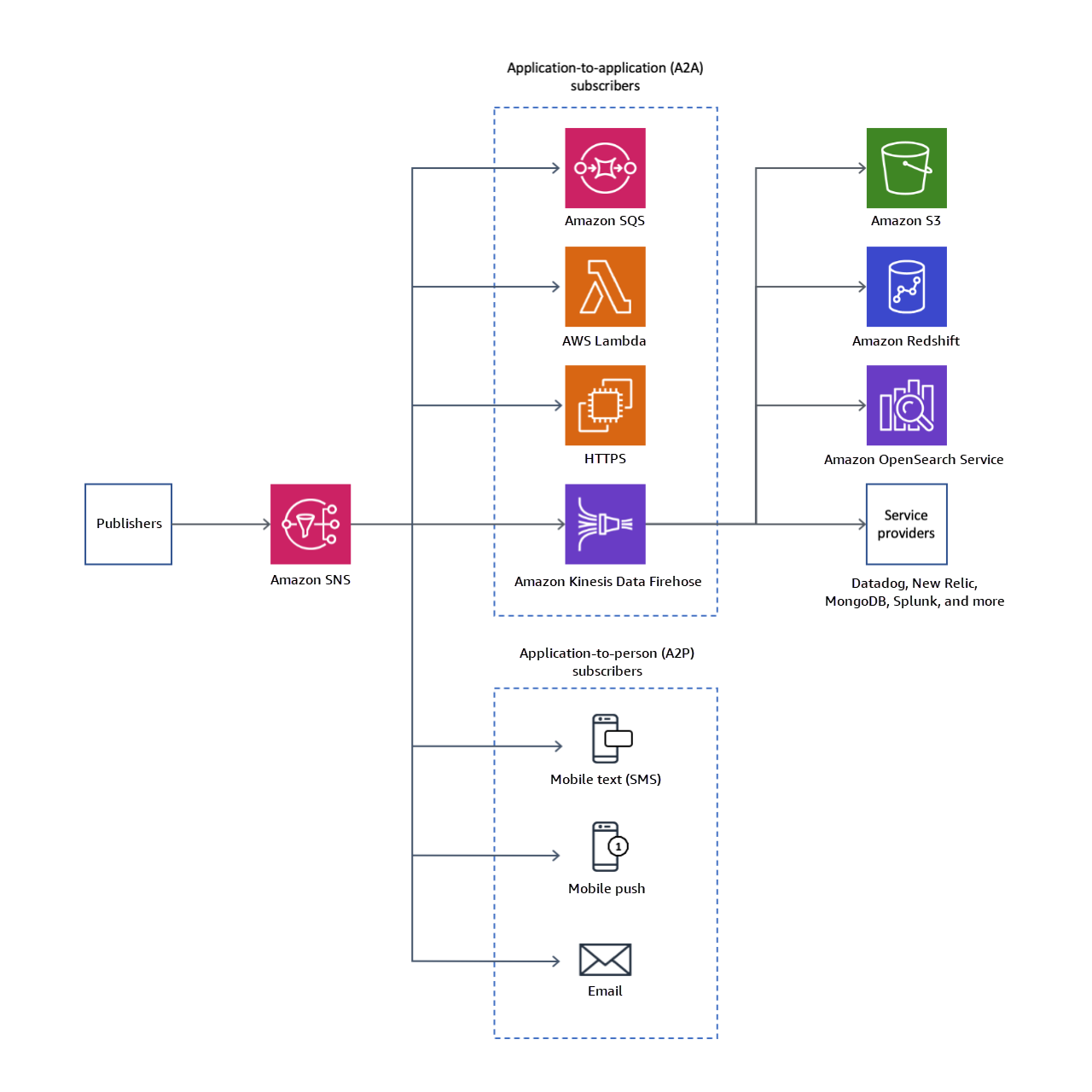
AWS Certified Solutions Architect – Professional (SAP-C01) Exam Learning Path

AWS Certified Solutions Architect - Professional certificate

AWS Certified Solutions Architect – Professional (SAP-C01) Exam Learning Path

⚠️ EXAM RETIRED — SAP-C01 No Longer Available

AWS Certified Solutions Architect – Professional (SAP-C01) was retired on November 14, 2022.

This content is maintained for historical reference only. You can no longer register for or take the SAP-C01 exam.

Current Exam:

SAP-C02 Exam Domains:

  • Domain 1: Design Solutions for Organizational Complexity (26%)
  • Domain 2: Design for New Solutions (29%)
  • Domain 3: Continuous Improvement for Existing Solutions (25%)
  • Domain 4: Accelerate Workload Migration and Modernization (20%)
  • AWS Certified Solutions Architect – Professional (SAP-C01) exam was the upgraded pattern of the previous Solution Architect – Professional exam which was released in the year (2018) and was retired on November 14, 2022, replaced by SAP-C02.
  • I recently recertified the existing pattern and the difference is quite a lot between the previous pattern and the latest pattern. The amount of overlap between the associates and professional exams and even the Solutions Architect and DevOps has drastically reduced.

AWS Certified Solutions Architect – Professional (SAP-C01) exam basically validated

  • Design and deploy dynamically scalable, highly available, fault-tolerant, and reliable applications on AWS
  • Select appropriate AWS services to design and deploy an application based on given requirements
  • Migrate complex, multi-tier applications on AWS
  • Design and deploy enterprise-wide scalable operations on AWS
  • Implement cost-control strategies

Refer to AWS Certified Solutions Architect – Professional (SAP-C01) Exam Guide

AWS Certified Solutions Architect - Professional Exam Domains

AWS Certified Solutions Architect – Professional (SAP-C01) Exam Resources

AWS Certified Solutions Architect – Professional (SAP-C01) Exam Summary

  • AWS Certified Solutions Architect – Professional (SAP-C01) exam was for a total of 170 minutes and it had 75 questions.
  • AWS Certified Solutions Architect – Professional (SAP-C01) focused a lot on concepts and services related to Architecture & Design, Scalability, High Availability, Disaster Recovery, Migration, Security and Cost Control.
  • Each question mainly touches multiple AWS services.
  • Questions and answers options have a lot of prose and a lot of reading that needs to be done, so be sure you are prepared and manage your time well.
  • As always, mark the questions for review and move on and come back to them after you are done with all.
  • As always, having a rough architecture or mental picture of the setup helps focus on the areas that you need to improve. Trust me, you will be able to eliminate 2 answers for sure and then need to focus on only the other two. Read the other 2 answers to check the difference area and that would help you reach the right answer or at least have a 50% chance of getting it right.

📝 Note: The SAP-C02 exam has the same format (75 questions, 180 minutes) but with updated domains and coverage of newer AWS services including VPC Lattice, AWS Verified Access, AWS Network Firewall, Amazon Data Firehose, and EventBridge. See the SAP-C02 Learning Path for current exam preparation.

AWS Certified Solutions Architect – Professional (SAP-C01) Exam Topics

Storage

  • S3
    • S3 Permissions & S3 Data Protection
      • S3 bucket policies to control access to VPC Endpoints
    • S3 Storage Classes & Lifecycle policies
      • covers S3 Standard, Infrequent access, intelligent tier and Glacier for archival and object transitions & deletions for cost management.
    • S3 Transfer Acceleration can be used for fast, easy, and secure transfers of files over long distances between the client and an S3 bucket.
    • supports the same and cross-region replication for disaster recovery.
    • integrates with CloudFront for caching to improve performance
    • S3 supports Object Lock and Glacier supports Vault lock to prevent the deletion of objects, especially required for compliance requirements.
    • supports S3 Select feature to query selective data from a single object.
  • Elastic Block Store
    • EBS Backup using snapshots for HA and Disaster recovery
    • Data Lifecycle Manager can be used to automate the creation, retention, and deletion of snapshots taken to back up the EBS volumes.
  • Storage Gateway
  • Elastic File System
    • provides a fully managed, scalable, serverless, shared and cost-optimized file storage for use with AWS and on-premises resources.
    • supports cross-region replication for disaster recovery
    • supports storage classes like S3
  • AWS Transfer Family
    • provides a secure transfer service (FTP, SFTP, FTPs) that helps transfer files into and out of AWS storage services.
    • supports transferring data from or to S3 and EFS.
  • FSx for Lustre
    • managed, cost-effective service to launch and run the HPC high-performance Lustre file system.

Database

  • DynamoDB
    • DynamoDB Auto Scaling
    • DynamoDB Streams for tracking changes
    • TTL to expire objects automatically and cost-effectively.
    • Global tables for multi-master, active-active inter-region storage needs.
    • Global tables do not support strong global consistency
    • DynamoDB Accelerator – DAX for seamlessly caching to reduce the load on DynamoDB for read-heavy requirements.
  • RDS
    • supports cross-region read replicas ideal for disaster recovery with low RTO and RPO.
    • provides RDS proxy for effective database connection pooling
    • RDS Multi-AZ vs Read Replicas
  • Aurora
    • fully managed, MySQL- and PostgreSQL-compatible, relational database engine
    • supports Aurora Serverless to on-demand, autoscaling configuration
    • Aurora Global Database consists of one primary AWS Region where the data is mastered, and up to five read-only, secondary AWS Regions. It is a multi-master setup but can be used for disaster recovery.
  • DocumentDB as a replacement for MongoDB

Data Migration & Transfer

  • Cloud Migration Services
    • Cloud Migration (hint: make sure you understand the difference between rehost, replatform, and rearchitect)
    • ⚠️ AWS Server Migration Service (SMS) — Discontinued (March 2022). Replaced by AWS Application Migration Service, now rebranded as AWS Transform MGN (June 2026).
    • Database Migration Service
      • enables quick and secure data migration with minimal to zero downtime
      • supports Full and Change Data Capture – CDC migration to support continuous replication for zero downtime migration.
      • homogeneous migrations such as Oracle to Oracle, as well as heterogeneous migrations (using SCT) between different database platforms, such as Oracle or Microsoft SQL Server to Aurora.
      • Hint: Elasticsearch (now OpenSearch) is not supported as a target by DMS
    • Snow Family
      • Ideal for one-time big data transfers usually for use cases with limited bandwidth from on-premises to AWS.
  • Application Discovery Service
    • ⚠️ No longer accepting new customers (Nov 7, 2025). Replaced by AWS Transform.
    • Agent-based can be used for Hyper-V and physical servers
    • Agentless (Discovery Connector — deprecated Nov 17, 2025) can be used for VMware but does not track processes. Replaced by AWS Transform Discovery Tool.
  • Disaster Recovery
    • Disaster Recovery whitepaper, although outdated, make sure you understand the difference between each type esp. pilot light, warm standby w.r.t RTO and RPO.
    • Compute
      • Make components available in an alternate region,
      • either as AMIs that can be restored
      • CloudFormation to create infra as needed
      • partial which can be scaled once the failover happens
      • or fully running compute in active-active confirmation with health checks.
    • Storage
      • S3 and EFS support cross-region replication
      • DynamoDB supports Global tables for multi-master, active-active inter-region storage needs.
      • Aurora Global Database provides a multi-master setup but can be used for disaster recovery.
      • RDS supports cross-region read replicas which can be promoted to master in case of a disaster. This can be done using Route 53, CloudWatch and Lambda functions.
    • Network
      • Route 53 failover routing with health checks to failover across regions.

Networking & Content Delivery

  • VPC – Virtual Private Cloud
    • Understand Security Groups, NACLs (Hint: know NACLs are stateless and need to open ephemeral ports for response traffic )
    • Understand VPC Gateway Endpoints to provide access to S3 and DynamoDB (hint: know how to restrict access on S3 to specific VPC Endpoint)
    • Understand VPC Interface Endpoints or PrivateLink to provide access to a variety of services like SQS, Kinesis or Private APIs exposed through NLB.
    • Understand VPC Flow Logs
    • Understand VPC Peering to enable communication between VPCs within the same or different regions. (hint: VPC peering does not support transitive routing)
  • Route 53
    • Routing Policies
      • focus on Weighted, Latency and failover routing policies
      • failover routing provides active-passive configuration for disaster recovery while the others are active-active configuration.
    • Route 53 Resolver
      • Outbound endpoint for AWS -> On-premises DNS query resolution
      • Inbound endpoint for On-premises DNS query resolution
  • CloudFront
    • fully managed, fast CDN service that speeds up the distribution of static, dynamic web or streaming content to end-users.
    • supports multiple origins including S3, ALB etc.
    • does not support Auto Scaling as an origin
    • supports Geo-restriction
    • supports Lambda@Edge and CloudFront Functions to execute code closer to the user.
    • Lambda@Edge can be used for quick auth checks, and redirect users based on request data.
    • Security can be enhanced by whitelisting CloudFront IPs or adding custom header in CloudFront and verifying it in ALB.
  • API Gateway
    • supports throttling, caching and helps define usage plans with API keys to identify clients
    • provides regional and edge-optimized endpoint types
    • supports authentication mechanisms, such as AWS IAM policies, Lambda authorizer functions, and Amazon Cognito user pools.
  • Load Balancer – ELB, ALB and NLB
  • Global Accelerator
    • optimizes the path to applications to keep packet loss, jitter, and latency consistently low.
    • helps improve the performance of the applications by lowering first-byte latency
    • provides 2 static IP addresses
    • does not preserve the client’s IP address with NLB
  • Transit Gateway or Transit VPC
    • is a network transit hub that can be used to interconnect VPCs and on-premises networks via Direct Connect or VPN.
    • Transit Gateway is regional and Transit Gateway Peering needs to be configured to peer regional Transit gateways.
  • Placement Groups
    • Cluster placement group with Enhanced Networking for HPC
    • Spread placement group for fault tolerance and high availability.
  • Direct Connect & VPN
    • provide on-premises to AWS connectivity
    • know Direct Connect vs VPN
    • VPN can provide a cost-effective, quick failover for Direct Connect.
    • VPN over Direct Connect provides a secure dedicated connection and requires a public virtual interface.
    • Direct Connect Gateway is a global network device that helps establish connectivity that spans VPCs spread across multiple AWS Regions with a single Direct Connect connection.

Security, Identity & Compliance

  • AWS Identity and Access Management
  • AWS Shield & Shield Advanced
    • for DDoS protection and integrates with Route 53, CloudFront, ALB and Global Accelerator.
  • AWS WAF
    • protects from common attack techniques like SQL injection and Cross-Site Scripting (XSS), Conditions based include IP addresses, HTTP headers, HTTP body, and URI strings.
    • integrates with CloudFront, ALB, and API Gateway.
    • supports Web ACLs and can block traffic based on IPs, Rate limits, and specific countries as well.
  • ACM – AWS Certificate Manager
    • helps easily provision, manage, and deploy public and private SSL/TLS certificates
    • is regional and you need to request certificates in all regions and associate individually in all regions.
    • does not provide certificates for EC2 instances.
  • AWS KMS – Key Management Service
    • managed encryption service that allows the creation and control of encryption keys to enable data encryption.
    • KMS Multi-region keys
      • are AWS KMS keys in different AWS Regions that can be used interchangeably – as though having the same key in multiple Regions.
      • are not global and each multi-region key needs to be replicated and managed independently.
  • Secrets Manager
    • helps protect secrets needed to access applications, services, and IT resources.
    • Secrets Manager vs SSM Parameter Store.
      • Supports automatic rotation of secrets, which is not provided by SSM Parameter Store.
      • Costs more than SSM Parameter Store.

Compute

  • EC2
  • Auto Scaling
  • Elastic Beanstalk supports Blue/Green deployment using swap URLs.
  • Lambda
    • Lambda running in VPC requires NAT Gateway to communicate with external public services
    • Lambda CPU can be increased by increasing memory only.
    • helps define reserved concurrency limit to reduce the impact
    • Lambda Alias now supports canary deployments
  • ECS – Elastic Container Service
    • container management service that supports Docker containers
    • supports two launch types – EC2 and Fargate which provides the serverless capability
    • For least privilege, the role should be assigned to the Task.
    • awsvpc network mode gives ECS tasks the same networking properties as EC2 instances.

Management & Governance tools

  • AWS Organizations
  • Systems Manager
    • AWS Systems Manager and its various services like parameter store, patch manager
    • Parameter Store provides secure, scalable, centralized, hierarchical storage for configuration data and secret management. Does not support secrets rotation. Use Secrets Manager.
    • Session Manager helps manage EC2 instances through an interactive one-click browser-based shell or through the AWS CLI without opening ports or creating bastion hosts.
    • Patch Manager helps automate the process of patching managed instances with both security-related and other types of updates.
  • CloudWatch
  • CloudTrail
    • for audit and governance
    • With Organizations, the trail can be configured to log CloudTrail from all accounts to a central account.
  • CloudFormation
    • Handle disaster Recovery by automating the infra to replicate the environment across regions.
    • Deletion Policy to prevent, retain or backup RDS, EBS Volumes
    • Stack policy can prevent stack resources from being unintentionally updated or deleted during a stack update. Stack Policy only applies for Stack updates and not stack deletion.
    • StackSets helps to create, update, or delete stacks across multiple accounts and Regions with a single operation.
  • Control Tower
    • to setup, govern, and secure a multi-account environment
    • strongly recommended guardrails cover EBS encryption
  • Service Catalog
    • allows organizations to create and manage catalogues of IT services that are approved for use on AWS with minimal permissions.
  • Trusted Advisor
    • helps with cost optimization and service limits in addition to security, performance and fault tolerance.
  • Compute Optimizer recommends optimal AWS resources for the workloads to reduce costs and improve performance by using machine learning to analyze historical utilization metrics.
  • AWS Budgets to see usage-to-date and current estimated charges from AWS, set limits and provide alerts or notifications.
  • Cost Allocation Tags can be used to organize AWS resources, and cost allocation tags to track the AWS costs on a detailed level.
  • Cost Explorer helps visualize, understand, manage and forecast the AWS costs and usage over time.

Analytics

  • Kinesis
  • Amazon OpenSearch Service (formerly Amazon Elasticsearch Service, renamed Sept 2021) provides a managed search and analytics solution.
  • Transcribe for Voice to Text conversion

Integration Tools

  • SQS in terms of loose coupling and scaling.
    • Difference between SQS Standard and FIFO esp. with throughput and order
    • SQS supports dead letter queues
  • CloudWatch integration with SNS and Lambda for notifications.

Architecture & Design Flows